
White campion
Silene latifolia Poir. subsp. alba (Mill.) Greuter & Burdet
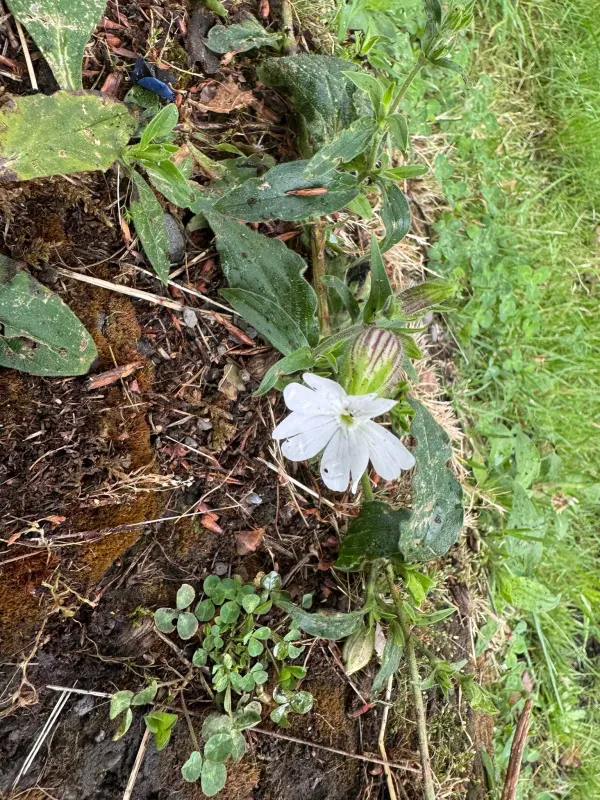
Description
Sowing dates
White campion (Silene latifolia subsp. alba) typically emerges early in the spring, making it a competitive weed in early-planted crops.
Seeds are capable of germinating from significant soil depths, which complicates mechanical control if cultivation is not sufficiently deep.
Overwintering rosettes of the weed provide a head start in the growing season, allowing the plant to rapidly dominate newly emerged crop rows.
The persistence of seeds in the soil seed bank necessitates multi-year management strategies to effectively deplete the infestation levels.
Standard agricultural practices often include stale seedbed techniques, which promote weed emergence before the final crop planting for easier eradication.
Growing requirements
Belonging to the Caryophyllaceae family, white campion thrives in nitrogen-rich environments commonly found in intensively managed agricultural fields.
It prefers well-drained, fertile soils but exhibits high adaptability to various soil types, ranging from sandy loams to heavier clay-based textures.
The plant requires moderate sunlight for optimal development and tends to grow taller and more robust in open field conditions.
Environmental requirements for growth are relatively broad, allowing the weed to persist in diverse climatic zones across temperate regions.
While tolerant to a range of soil pH levels, it performs best in neutral to slightly alkaline soil conditions typical of productive farmlands.
Main diseases and pests
White campion can act as an alternate host for various plant pathogens, potentially increasing the disease pressure on surrounding crops.
Significant yield losses occur when the weed competes for essential water and soil nutrients during the critical crop growth stages.
Certain insect pests utilize the foliage of white campion for feeding and egg-laying, which can lead to increased infestation of nearby crop plants.
Infestations reduce the overall harvest quality and can contaminate grain samples if the weed seeds are harvested alongside the crop.
- Implementing systematic crop rotation is essential to break the life cycle of the weed.
- Application of selective herbicides is recommended when mechanical control proves insufficient in dense populations.