
Jupiter's distaff
Silene flos-jovis (L.) Greuter & Burdet
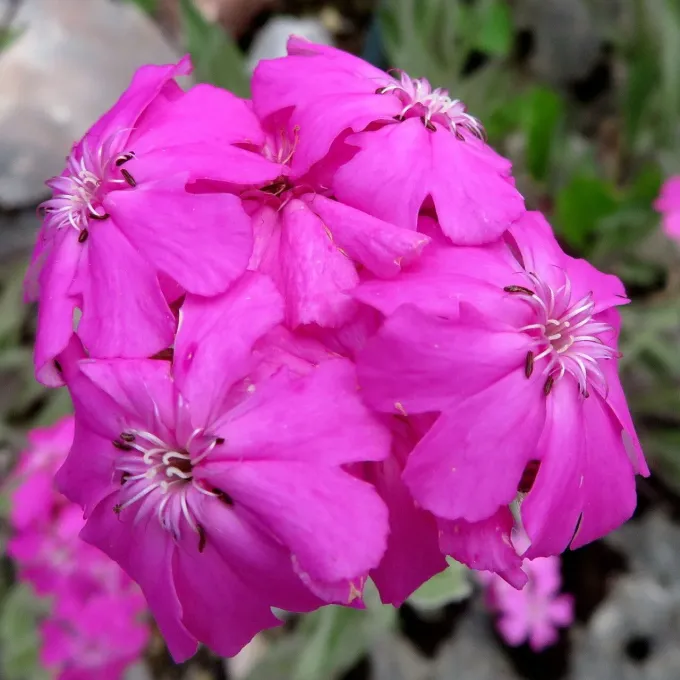
Description
Sowing dates
Seeds of Jupiter's distaff are typically sown in early spring or autumn. For optimal results, seeds should be sown on the surface of well-drained soil, as they require light to germinate effectively.
When starting indoors, seeds should be placed in seed trays in late winter, kept in a cool and bright environment to ensure strong, compact growth of the seedlings.
Transplanting seedlings to their final location is best done after the risk of frost has passed, usually late May, to allow plants to establish themselves before summer heat.
Proper spacing is crucial; plants should be set about 30 centimeters apart to allow for proper air circulation, which prevents the buildup of humidity around the foliage.
Direct seeding is also successful in well-prepared garden beds, provided that the soil surface remains moist until germination occurs.
Growing requirements
Jupiter's distaff (Silene flos-jovis) is a herbaceous perennial member of the Caryophyllaceae family, known for its distinctive silver-grey foliage and vibrant pink flowers.
Originally native to the Alpine regions, this plant thrives in rocky or sandy soils that offer excellent drainage, mirroring its natural high-altitude environment.
Sunlight is a key requirement for this species; it performs best in full sun, which maintains the intensity of the flower color and prevents the plant from becoming leggy.
The soil should have a neutral to slightly alkaline pH, and while it prefers moderate fertility, it does not tolerate nutrient-rich, heavy soils that hold too much water.
It is a hardy plant that handles temperate climates well, showing resilience to varying weather conditions, although it strictly avoids waterlogged environments.
Main diseases and pests
Root rot is the most significant threat to the plant, primarily occurring in poorly drained or overly dense soil conditions that inhibit root aeration.
Powdery mildew can infect leaves during humid spells, appearing as a white dusting that can weaken the plant if left untreated for an extended period.
Aphids can be problematic during the early growth season, congregating on soft new shoots and flower buds, which requires timely scouting and intervention.
Cultural practices, such as removing spent flower stems, help maintain plant vigor and reduce the likelihood of pests taking hold in decomposing debris.
Using fungicide sprays during particularly wet seasons is an effective way to manage fungal outbreaks before they spread across the garden plot.