
Moss campion
Silene acaulis (L.) Jacq.
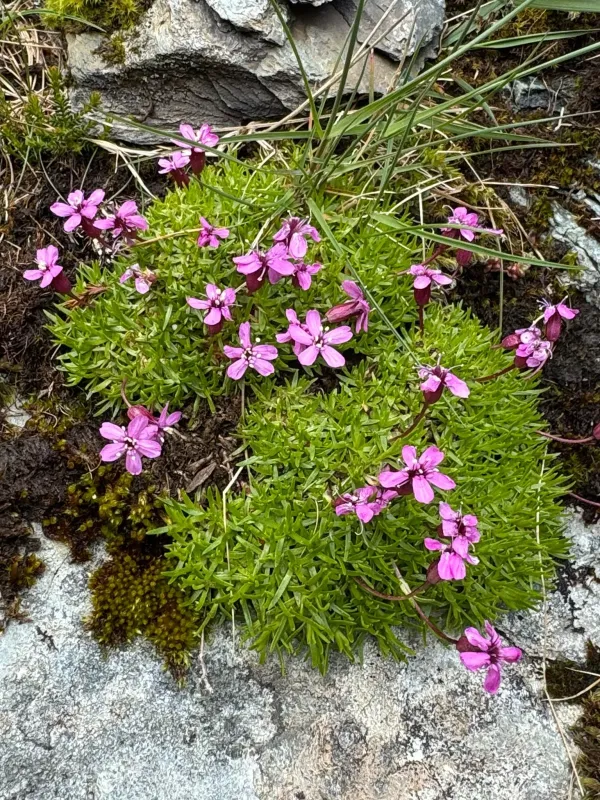
Description
Sowing dates
Moss campion propagation is best achieved via seed sowing or careful division of established mats. Seeds should be sown in autumn to allow for natural stratification or chilled before spring sowing.
Use a gritty, well-draining substrate in shallow trays. Seeds must be lightly pressed into the surface rather than buried deep, as they require light and air circulation to germinate successfully.
Seedlings develop very slowly, which is characteristic of high-altitude species. It is crucial to maintain a steady level of moisture without making the soil soggy during the early stages of growth.
Pricking out should be done once the plants are robust enough to handle. Handle the root system with extreme care, as moss campion plants are sensitive to root disturbance during transplanting.
In landscape settings, plants are usually purchased as container-grown specimens. When planting out, ensure the crown of the plant is slightly elevated to prevent water from pooling around the base.
Growing requirements
Silene acaulis, a member of the Caryophyllaceae family, is an iconic alpine cushion plant. It originates from the high-latitude and high-altitude regions of the Northern Hemisphere.
The plant requires full sun to thrive and maintain its compact, cushion-like habit. Any degree of shade leads to etiolated, leggy growth that eventually weakens the plant structure significantly.
Soil requirements are strict: the medium must be lean, gritty, and exceptionally well-draining. Acidic or heavy soils that retain water are lethal to this species, leading to inevitable root rot.
Climate adaptation is centered on cold hardiness and drought tolerance. However, moss campion struggles in lowland environments where summer heat and humidity are combined, necessitating careful site selection.
Hostile conditions are its natural habitat, meaning the plant requires very little supplemental fertilization. In fact, excessive nutrients will ruin the plant's form by promoting rapid, soft, and unhealthy foliage growth.
Main diseases and pests
The primary threat to moss campion is root and crown rot caused by standing water or excessive soil moisture. Proper drainage is the single most important factor for plant longevity.
Fungal issues, such as leaf spot, can occur if humidity levels are too high or if air circulation around the cushion is blocked by debris or surrounding vegetation.
Pests like slugs and snails may graze on the foliage during wet spells, causing disfigurement. Keep the area around the cushion clean and free of organic mulch to discourage these pests.
Encroachment by weeds is a serious threat in garden settings. Moss campion is not a strong competitor and will quickly lose ground to more vigorous, fast-spreading species if left unchecked.
Insects like aphids may occasionally infest the plant during the flowering season. Spot treatment with insecticidal soap is recommended, provided it is done early to prevent damage to the delicate mats.