
Thunbergia vogeliana
Thunbergia vogeliana
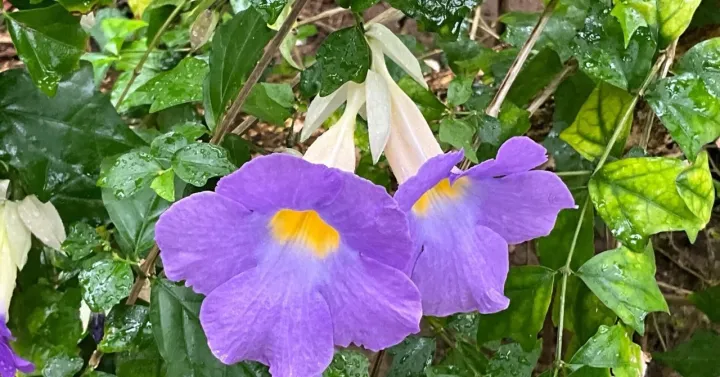
Description
Growing requirements
Thunbergia vogeliana is a notable species within the Acanthaceae family, native to the tropical forests of Western and Central Africa. It is recognized for its robust growth habit and ornamental value as a flowering shrub.
The plant thrives in environments that mimic its tropical origin, requiring consistent temperatures between 18 and 26 degrees Celsius. It does not tolerate frost and should be kept in protected environments during colder seasons.
Soil requirements include a rich, well-draining potting medium, ideally a mix of peat, perlite, and organic matter. Maintaining a slightly acidic to neutral pH level is optimal for nutrient uptake.
High humidity levels are essential for this species to flourish. In greenhouse settings, misting or using a humidifier is recommended to maintain a humidity level above 60% to prevent leaf edge browning.
Regarding its horticultural use, it is highly valued for indoor conservatory displays and as a container specimen in frost-free climates. Its vibrant flowers make it a centerpiece in botanical collections.
Main diseases and pests
Spider mites are the most common pest affecting Thunbergia vogeliana, especially in low-humidity environments. They cluster on the undersides of leaves, requiring regular inspection and moisture management.
Scale insects and mealybugs may also infest the plant, settling on stems and leaf nodes. Hand-removal or the use of horticultural oils is often sufficient to control minor infestations effectively.
Root rot remains the most significant threat to the plant's longevity, caused primarily by overwatering or compacted, poorly aerated soil. Ensuring the pot has adequate drainage holes is a critical cultural practice.
Fungal leaf spots can occur if foliage remains wet for extended periods in low-light conditions. Improving air circulation around the canopy is the best preventative strategy against these pathogens.
Nutrient imbalances, particularly nitrogen deficiency, can cause reduced flowering. A balanced NPK fertilizer applied during the growing season helps sustain the shrub's health and vibrant appearance.