
Thunbergia kirkii
Thunbergia kirkii
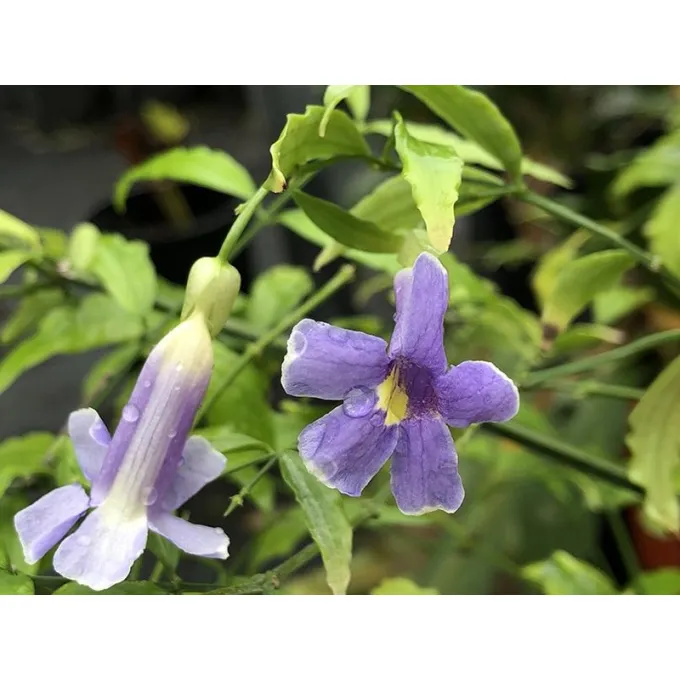
Description
Growing requirements
Thunbergia kirkii is a distinct species within the Acanthaceae family. It is typically characterized as a perennial semi-shrub or a climbing vine, originating from the tropical regions of East Africa. Its botanical structure allows it to adapt to various vertical supports in a garden or greenhouse environment.
The climatic requirements for this species are centered on consistency. It thrives in temperatures ranging from 20 to 25 degrees Celsius. Being a tropical plant, it is sensitive to cold drafts and temperatures dropping below 15 degrees, which can halt its growth and cause leaf damage.
Soil management for Thunbergia kirkii requires a well-structured, nutrient-rich substrate. A mixture comprising peat, humus, and coarse sand provides the necessary aeration and moisture retention. Proper drainage is essential to prevent waterlogging, which the plant roots cannot tolerate.
Light exposure must be carefully managed to ensure healthy foliage and prolific blooming. Bright, indirect sunlight is preferred, as intense midday sun can scorch the leaves. If kept indoors, placing the plant near a southern or eastern window is usually ideal for optimal development.
Regular maintenance involves careful irrigation. Watering should be applied when the top layer of the soil feels slightly dry to the touch. During the active growing season, supplementing the irrigation with balanced water-soluble fertilizers helps support the plant's metabolic processes and flowering intensity.
Main diseases and pests
Thunbergia kirkii is susceptible to several common horticultural pests. Spider mites are particularly problematic during warmer months or in low-humidity indoor environments. Regular monitoring of the leaf undersides is recommended to facilitate early intervention with appropriate acaricides.
Fungal issues such as powdery mildew can develop if the plant is grown in conditions with poor airflow or high moisture levels on the foliage. To mitigate these risks, it is essential to ensure adequate spacing between plants and to keep the leaves dry during late-evening watering sessions.