
Thunbergia battiscombei
Thunbergia battiscombei
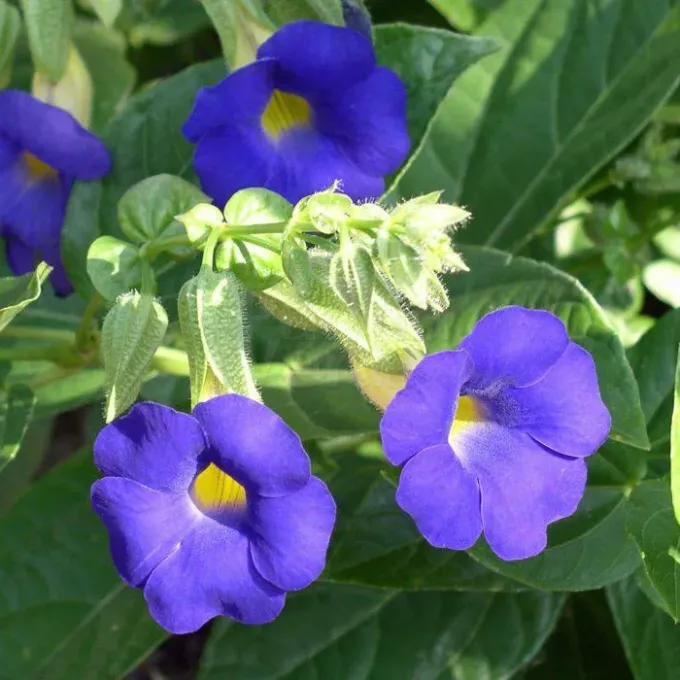
Description
Sowing dates
Thunbergia battiscombei belongs to the Acanthaceae family and is a perennial climbing vine native to tropical East Africa. In non-tropical climates, it is typically grown as an annual because it is highly sensitive to frost and cold temperatures.
Seeds should be sown indoors in late winter or early spring, approximately 8 to 10 weeks before the last expected frost date. For optimal germination, a stable soil temperature between 22 and 25 degrees Celsius is required for consistent results.
Use a light, well-draining potting mix based on peat and perlite to ensure proper root development. Bury the seeds about 0.5 to 1 cm deep and cover the container with plastic wrap to maintain high humidity until the seedlings emerge.
Prick out the young seedlings into individual pots once they develop their first set of true leaves. Ensure they receive plenty of bright, indirect sunlight to prevent the vines from becoming leggy and weak during their early stages of growth.
Transplant the established seedlings outdoors only after all threats of frost have passed and the ambient temperature remains consistently above 15 degrees Celsius, allowing the plant to acclimatize to outdoor conditions gradually.
Growing requirements
Thunbergia battiscombei thrives in full sun, but in regions with intense summer heat, it benefits from light shade during the hottest part of the afternoon. Proper lighting is essential to achieve the characteristic rich blue-violet blooms.
The soil should be fertile, organic-rich, and possess a neutral to slightly acidic pH. Providing excellent drainage is crucial, as the plant does not tolerate waterlogged conditions, which lead to root rot and eventual plant failure.
Consistent watering is necessary during the active growing season. While the soil should be kept moist, allow the top layer to dry out slightly between waterings to encourage a strong root system and prevent fungal outbreaks.
As a climbing vine, it requires sturdy structural support, such as a trellis, wire, or fence, to grow effectively. Regular application of a balanced liquid fertilizer every two weeks will promote vigorous vegetative growth and profuse flowering.
High humidity is favorable for this tropical species. If growing in an indoor conservatory or during dry spells, misting the foliage or using a humidifier can help maintain the plant's health and prevent leaf tip burn.
Main diseases and pests
Spider mites and whiteflies are the primary pests that affect Thunbergia battiscombei, especially in dry, warm environments. These pests frequently congregate on the underside of leaves, causing yellowing and a decline in overall plant vigor.
Aphids can also infest the tender new growth and developing flower buds. Prompt identification and the application of insecticidal soaps or horticultural oils can help manage these populations before they cause significant structural damage.
Root rot is the most common disease, caused by overwatering or poor drainage systems. If the plant shows signs of wilting despite moist soil, it is an indicator of compromised roots, requiring an immediate adjustment to the irrigation routine.
Powdery mildew may occur when humidity is high and air circulation is insufficient. To combat this, ensure proper spacing between plants and avoid wetting the foliage directly when watering, as moisture on leaves promotes fungal spore development.
Integrated pest management, including regular inspection and maintaining good hygiene around the plant, is the best strategy. Removing debris and controlling weeds around the base of the vine helps reduce the presence of potential pathogens.