
Annual thunbergia
Thunbergia annua
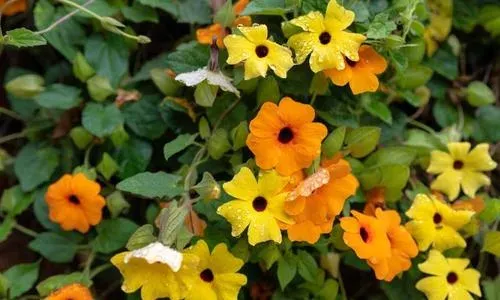
Description
Sowing dates
Annual thunbergia (Thunbergia annua) is a member of the Acanthaceae family. Seeds are typically sown indoors in early spring, specifically in March, to ensure the plants are robust before the outdoor season.
For direct sowing in garden beds, wait until the soil is consistently warm, as this species is highly sensitive to even light frost and cold night temperatures.
Seeds should be planted at a shallow depth of 0.5 to 1 centimeter. Consistent soil moisture and a temperature range of 20 to 24 degrees Celsius are essential for successful germination.
Seedlings usually emerge within two weeks. Provide ample bright light to prevent the stems from stretching, which often happens if the light intensity is too low.
Pricking out the seedlings occurs once the first set of true leaves develops, allowing the young plants to establish stronger root systems in individual pots.
Growing requirements
This species thrives in sunny, well-lit locations. Full sun exposure is necessary to encourage a prolific blooming cycle and strong, healthy stem development.
Well-drained, fertile soil with a balanced pH level is ideal. Waterlogging can quickly cause root damage, so ensure the substrate remains moist but never saturated.
Regular watering is required during the heat of summer. Avoid getting water on the leaves during peak sun hours to prevent physiological stress or scorching.
Incorporate balanced liquid fertilizers every two weeks to sustain growth. Phosphorus-rich fertilizers are particularly effective during the blooming phase to boost flower production.
Maintaining a clean growing area by removing spent flowers helps the plant divert energy into producing new buds rather than setting seeds.
Main diseases and pests
Spider mites are a significant threat, particularly in hot, dry weather conditions. They feed on plant sap, causing leaves to yellow and eventually drop if not treated.
Aphids often colonize the tender young tips of the plant. If infestation occurs, insecticidal soaps or systemic pesticides are recommended to control the population.
Whiteflies are common in greenhouse environments. Using yellow sticky traps and improving ventilation are key management strategies for this specific pest.
Fungal diseases like powdery mildew can appear if airflow is stagnant or humidity levels remain high for extended periods during the night.
Root rot is typically caused by overwatering or poor drainage. Proper cultural practices, such as allowing the top layer of soil to dry out, can prevent these issues.