
Scarlet Clockvine
Thunbergia coccinea
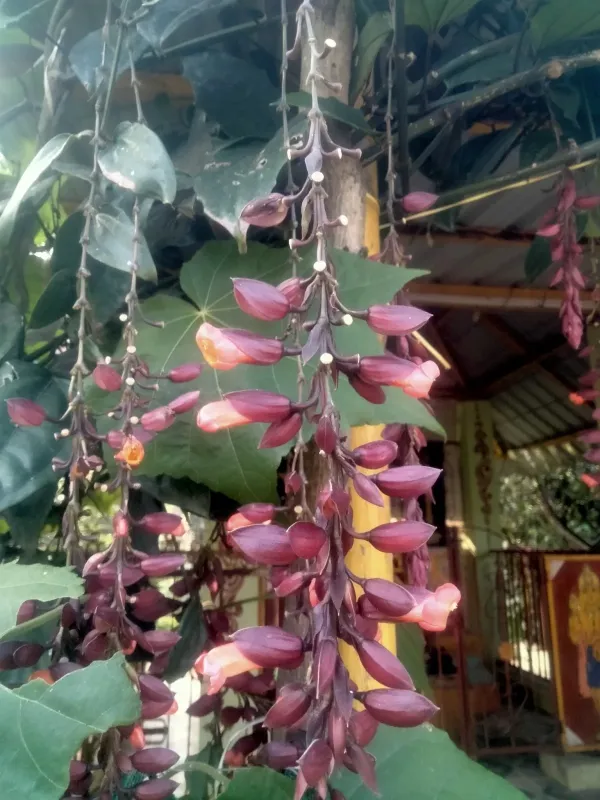
Description
Growing requirements
The Scarlet Clockvine (Thunbergia coccinea) is a member of the Acanthaceae family. It is a vigorous, woody-stemmed perennial climber native to the Himalayas and parts of Southeast Asia.
Botanically, it is known for its fast-growing habit, which requires strong support structures to thrive. The leaves are typically ovate to lanceolate, with a distinctive texture that adds foliage interest even when not in bloom.
The flowers are the highlight of this species, appearing in long, pendulous racemes. Their vibrant red-to-orange coloration makes them highly attractive for ornamental use in conservatories and warm climates.
This crop thrives in bright, filtered light. While it can handle some morning sun, exposure to intense afternoon heat can scorch the foliage and reduce the longevity of the flower racemes.
Well-draining, nutrient-rich soil is essential for the healthy development of this climber. It prefers consistent moisture but must never be left in waterlogged conditions, as this leads to root rot.
Main diseases and pests
The most common pests affecting Thunbergia coccinea are spider mites, which thrive in low-humidity indoor environments. They can quickly damage leaves, causing them to yellow and drop.
Whiteflies are also significant threats that feed on the sap of the vine. Managing these insects involves keeping the environment clean and using appropriate insecticidal soaps if necessary.
Root rot is the primary disease concern, usually caused by overwatering or poor drainage. It is crucial to allow the top layer of the soil to dry out between watering sessions.
Scale insects can occasionally be found on the woody stems of older plants. Careful manual removal or application of horticultural oils helps in managing these persistent pests.
Maintaining strong plant health through balanced fertilization and proper airflow is the best defense against both insect infestations and fungal infections for this ornamental vine.