
Thunbergia laevis
Thunbergia laevis
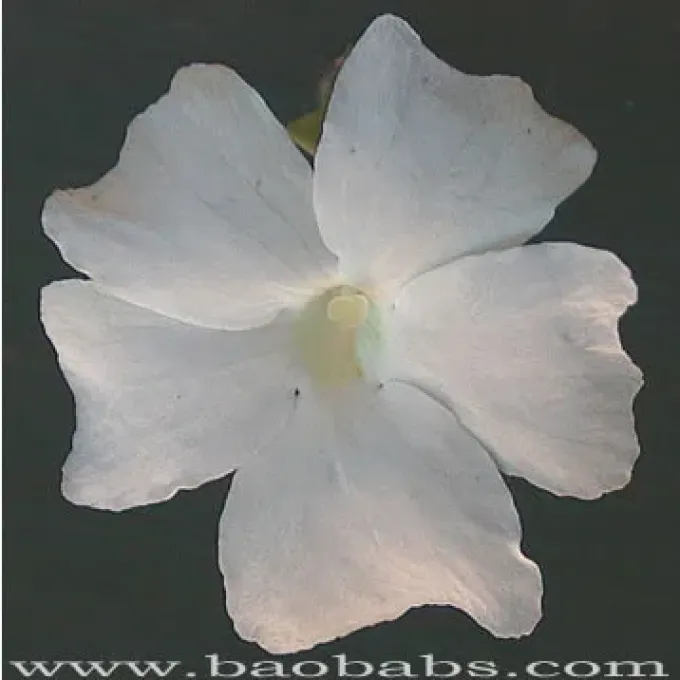
Description
Sowing dates
Thunbergia laevis is best started from seeds in a controlled greenhouse environment during the late winter months to ensure a head start.
Seeds should be sown in a well-draining seed-starting mix, keeping the temperature consistent at around 20 to 22 degrees Celsius for successful germination.
Once the seedlings develop two or more sets of true leaves, they should be transplanted into larger individual containers to avoid root crowding.
Hardening off the plants is a crucial step before transplanting them into the garden to ensure they can withstand outdoor environmental conditions.
Outdoor planting should only occur once all frost risks have passed, ensuring the soil has warmed up sufficiently for active root growth.
Growing requirements
This species, belonging to the Acanthaceae family, thrives in sunny locations that offer some protection from intense afternoon heat.
The ideal soil is fertile, loose, and well-drained, with a slightly acidic to neutral pH level to optimize nutrient uptake throughout the growing season.
Adequate moisture is essential for this vine; watering should be consistent, ensuring the substrate remains damp but never waterlogged to prevent root rot.
Regular fertilization with a balanced liquid fertilizer will encourage vigorous vining growth and maximize the potential for decorative leaf development.
As a climbing plant, Thunbergia laevis requires sturdy supports such as trellises or wires to reach its full height and maintain structural health.
Main diseases and pests
Spider mites are common pests that frequently attack the foliage, especially in conditions where humidity levels are kept consistently low.
Whiteflies can also cause significant damage to the plant, potentially leading to leaf yellowing and a decline in the overall vigor of the vine.
Fungal issues, such as powdery mildew, may emerge if there is inadequate air circulation around the foliage or if the environment remains overly humid.
Management of these threats involves monitoring the plant regularly and applying appropriate organic or chemical pesticides as needed for control.
Maintaining good garden hygiene, such as removing debris and preventing overcrowding, is a primary strategy for long-term plant health and vigor.