
Natal clockvine
Thunbergia natalensis
Description
Growing requirements
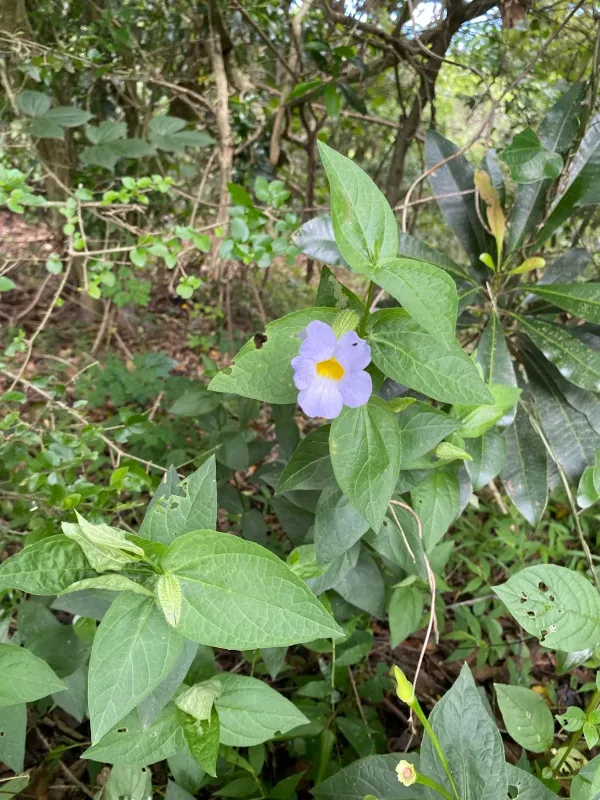
The Natal clockvine (Thunbergia natalensis) is a perennial subshrub species belonging to the Acanthaceae family. Native to the southern regions of Africa, this plant is valued for its unique upright growth habit, which distinguishes it from many other vining members of the Thunbergia genus.
Botanically, it features sturdy, erect stems and opposite leaves that are covered in fine hairs. The plant produces trumpet-shaped flowers, typically in shades of blue or violet, which bloom periodically throughout the growing season.
Climate requirements for this species include consistent warmth and moderate humidity. It thrives in locations that mimic its native subtropical environment, avoiding harsh frosts which can be fatal to the mature plant structure.
Soil composition must prioritize drainage and fertility. A mix of peat, perlite, and loam is ideal, as it allows for proper oxygen exchange while retaining necessary moisture levels for sustained growth.
In terms of light exposure, the plant performs best in partial to full sun. While it can tolerate bright, indirect light indoors, consistent sunlight exposure is necessary to encourage the prolific development of its distinctive blooms.
Main diseases and pests
Spider mites represent a significant threat to the Natal clockvine, particularly in indoor environments with low humidity. Regular misting and proper ventilation are effective preventive measures against these small pests.
Whiteflies are another common concern, as they cluster on the underside of leaves and sap the plant's vitality. Early detection via visual inspection is key to controlling infestations before they spread to other plants.
Root rot is a frequently encountered issue caused by overwatering or poorly draining soil. To mitigate this risk, it is essential to ensure that the potting medium dries out slightly between watering intervals.
Fungal diseases, such as powdery mildew, may affect the foliage if air circulation is restricted. Pruning overcrowded branches can improve airflow and reduce the humidity levels that favor fungal spore development.
Aphids might occasionally feed on new, tender growth. If these pests appear, they can often be managed with a mild insecticidal soap or by physically removing them during the early stages of colonization.