
Mysore trumpet vine
Thunbergia mysorensis
Description
Growing requirements
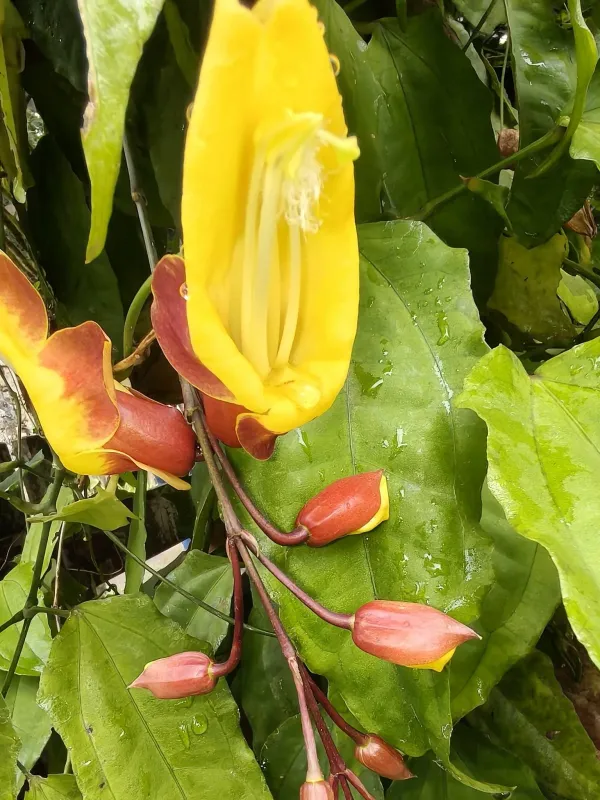
Mysore trumpet vine (Thunbergia mysorensis) belongs to the Acanthaceae family. It is a vigorous, woody evergreen climber native to the tropical regions of southern India, known for its rapid growth and spectacular cascading flower racemes.
The plant thrives in warm tropical climates. It requires consistent temperatures between 20°C and 28°C to maintain healthy growth. In non-tropical regions, it must be grown in greenhouses or conservatories as it cannot survive frost or prolonged exposure to temperatures below 10°C.
Soil requirements for this species are specific: it prefers a well-draining, humus-rich potting mix with a slightly acidic to neutral pH. Proper drainage is essential, as waterlogging can cause fatal root rot and inhibit nutrient absorption.
Cultivation practices involve providing sturdy trellis systems, as the plant can reach lengths of several meters in a single season. Pruning is vital to maintain shape and promote a denser flowering habit, especially after the primary blooming period.
The ornamental value of this vine makes it a popular choice for botanical gardens and luxury interiors. Its unique golden-yellow and mahogany flowers hang down like pendants, making it a standout feature in any vertical landscape setting.
Main diseases and pests
Common pests affecting Mysore trumpet vine in controlled environments include spider mites, which thrive in low-humidity conditions. Regular misting of the foliage helps to deter these infestations.
Mealybugs and whiteflies are also known to attack the soft stems of the plant. Monitoring the undersides of leaves is critical to catching an infestation early and applying necessary control measures.
Fungal issues, particularly root rot, often stem from overly frequent irrigation. It is advised to allow the soil surface to dry slightly before applying water to ensure the roots remain healthy and aerated.
Poor air circulation can lead to outbreaks of powdery mildew on the leaves. Proper spacing and consistent ventilation are key factors in preventing this common fungal disease.
To ensure robust health, practitioners should implement an integrated pest management program, focusing on biological controls and proper environmental regulation rather than strictly chemical interventions.