
Thick-leaved stonecrop
Sedum dasyphyllum L.
Description
Sowing dates
The thick-leaved stonecrop (Sedum dasyphyllum L.) belongs to the Crassulaceae family. It is widely propagated vegetatively, which is the most reliable and efficient method for creating dense ornamental ground covers in garden designs.
The ideal time for propagation is from spring to mid-summer. Taking stem cuttings allows for rapid rooting in a well-draining substrate, ensuring the plants establish themselves before the onset of autumn cooling.
Seed propagation is also possible but requires a fine, sandy medium. Seeds should be sown on the surface and lightly dusted with sand. Maintaining consistent humidity is crucial during the germination phase for these small seeds.
For container-grown specimens, ensure the use of porous substrates, such as mixes containing pumice or perlite. This creates the necessary environment for the roots to develop without the risk of water retention.
Transplanting into the garden should be done after the risk of frost has passed. Planting density should be carefully managed to allow sufficient airflow between plants, which is essential for the long-term health of the colony.
Growing requirements
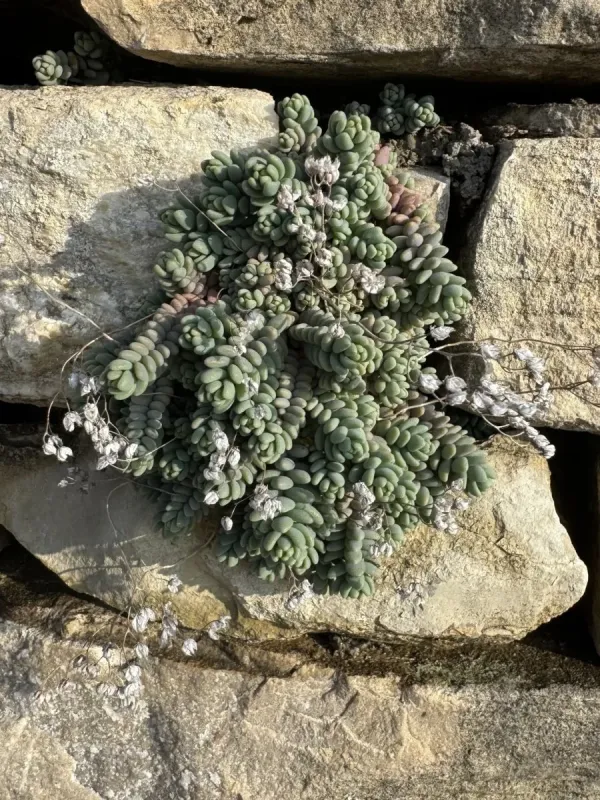
As a mountain-origin species, this plant requires high levels of solar radiation. Full sun exposure is non-negotiable for maintaining the plant’s tight, compact rosette structure and its unique glaucous blue-grey color.
The species is highly adapted to poor, rocky soils. In agricultural or landscape settings, the primary requirement is exceptional drainage. It thrives in crevices or on slopes where water cannot settle, preventing root asphyxiation.
Thick-leaved stonecrop is remarkably drought-tolerant. Its fleshy leaves store water effectively, allowing it to withstand long periods of dry weather without the need for additional irrigation.
Regarding temperature, it is relatively hardy but benefits from protection in extremely cold climates, especially where there is little snow cover. Excessively high temperatures combined with high humidity should be avoided.
The plant does not require high levels of soil nutrients. In fact, providing too much organic fertilizer can lead to weak, elongated stems that lose their aesthetic and structural integrity.
Main diseases and pests
Fungal pathogens are the primary threat, often appearing as root or stem rot if the plant is kept in overly moist conditions. Improving soil drainage is the most effective preventative measure against these issues.
Pests such as aphids can occasionally be found on new growth during warm, dry spells. They can usually be managed with mild horticultural soaps or systemic insecticides if the infestation is severe.
Slugs and snails can cause damage to the succulent foliage, particularly during damp weather. Using barriers or slug bait is an effective control strategy to preserve the plant's ornamental value.
Crowded planting schemes can hinder air circulation, creating an environment favorable for disease development. Maintaining appropriate spacing is essential for keeping the planting area healthy.
Regular inspections are recommended to catch any signs of infestation or rot early. Prompt removal of damaged stems prevents the further spread of infections to neighboring plants within the carpet.
Harvesting
The primary use of Sedum dasyphyllum is in landscaping, specifically for rock gardens, green roofs, and dry stone walls. Harvesting is usually limited to taking cuttings for propagation purposes.
Maintenance pruning helps keep the mat dense and uniform. By removing dead or elongated stems, the gardener stimulates new growth, ensuring the plant remains vibrant and compact throughout the season.
Propagating the plant through division every three to four years helps prevent the center of the mat from becoming woody or bare. This process rejuvenates the planting and ensures continued health.
Weed management is critical in the first year after planting. Since the stonecrop creates a tight cover eventually, routine weeding will become less necessary as the plant matures and dominates the space.
When collecting material, always choose healthy, turgid stems. These cuttings will have the highest success rate when planted into new pots or garden areas, ensuring consistent performance in future seasons.