
Japanese stonecrop
Sedum japonicum Siebold ex Miq.
Description
Growing requirements
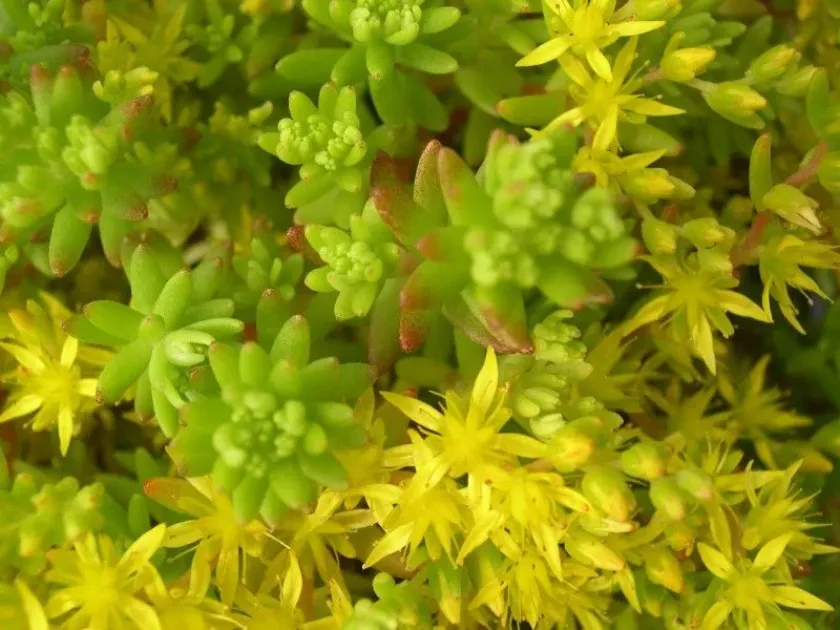
Japanese stonecrop (Sedum japonicum Siebold ex Miq.) is a perennial succulent plant belonging to the Crassulaceae family. Native to East Asia, particularly Japan, this species is well-adapted to rocky environments and mountain slopes.
The plant features fleshy, succulent leaves that store moisture, allowing it to survive in harsh conditions with limited water availability. Its growth habit is typically spreading, creating dense mats of foliage that make it an excellent choice for rock gardens and green roofs.
Regarding soil requirements, Sedum japonicum thrives in well-draining, sandy, or gritty substrates. Poor drainage is the primary cause of plant death, as the root system is highly susceptible to rotting in waterlogged soil conditions.
This crop requires full sun to maintain its compact form and vibrant leaf color. When grown in shaded areas, the plant becomes leggy and loses its aesthetic appeal, often leading to reduced vigor and increased susceptibility to diseases.
Maintenance involves minimal irrigation, allowing the soil to dry out completely between waterings. Fertilization should be kept to a minimum, as high nutrient levels, especially nitrogen, can cause excessive, weak growth that reduces winter hardiness.
Main diseases and pests
The most significant threats to Japanese stonecrop are fungal pathogens such as root rot and stem rot, which proliferate in damp environments. Proper soil management and ensuring excellent drainage are the most effective preventative measures against these issues.
Common pests include mealybugs and aphids, which often congregate in the nooks and crannies of the foliage. These can be managed using insecticidal soaps or systemic treatments if an infestation becomes widespread.
Slugs and snails can pose a danger to the succulent leaves, particularly during humid weather. Utilizing a layer of coarse gravel or mulch around the base of the plant can create an inhospitable barrier for these pests.
Nematodes can cause significant damage to the roots, leading to a decline in plant health. Avoiding the introduction of contaminated soil and using sterilized potting mixes are essential for prevention in containerized growth.
Viruses occasionally affect the plant, manifesting as stunted or deformed growth. Because there is no cure, it is imperative to promptly isolate and destroy affected specimens to protect the rest of the planting site.