
Sedum lineare
Sedum lineare Thunb.
Description
Growing requirements
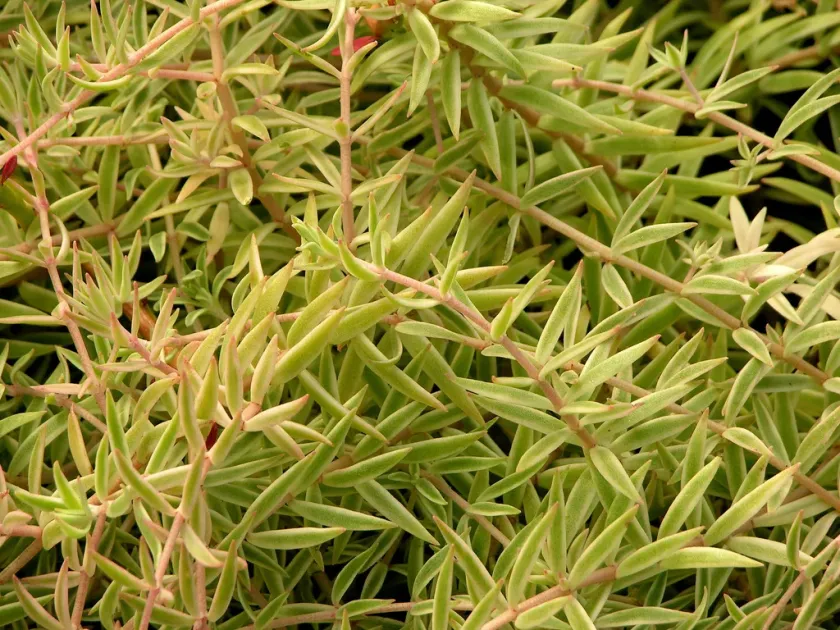
Sedum lineare is a perennial succulent plant belonging to the Crassulaceae family. It is widely recognized for its trailing stems and narrow, fleshy leaves that form dense mats.
Native to East Asia, specifically China and Japan, this species has adapted to survive in harsh rocky environments. It is highly valued for its ability to thrive where other plants might fail.
The plant requires full sun to partial shade for optimal growth. Exposure to ample light ensures that the plant maintains its compact form and vibrant leaf color throughout the season.
Soil requirements focus primarily on drainage. The species prefers sandy or gravelly soil mixes that allow water to drain quickly, preventing moisture accumulation around the roots.
It is exceptionally drought-tolerant once established. However, during prolonged dry spells in container cultivation, supplemental watering is necessary to prevent excessive dehydration of the succulent leaves.
Main diseases and pests
The primary threat to Sedum lineare is root rot, caused by waterlogged soil. Proper drainage is the most effective way to prevent this fatal condition during the growing season.
Aphids are the most common pests that infest these plants. They cluster on the new growth, potentially causing stunting and foliage discoloration if left untreated by the gardener.
Mealybugs can also pose a problem, particularly in environments with poor airflow. These pests leave a cottony residue that is easy to spot during routine garden maintenance.
Slugs and snails may feed on the succulent foliage during damp conditions. Protecting the plant with organic barriers or careful monitoring is recommended for healthy growth.
Fungal diseases are rare but can occur in high humidity. Ensuring adequate space between plants and avoiding overhead watering helps to keep the foliage dry and disease-free.