
Sedum makinoi
Sedum makinoi Maxim.
Description
Growing requirements
Sedum makinoi Maxim. is a low-growing perennial succulent belonging to the Crassulaceae family. Native to Japan, this plant is naturally adapted to growing on rocky slopes and mountain crevices, making it highly resilient in specific landscape settings.
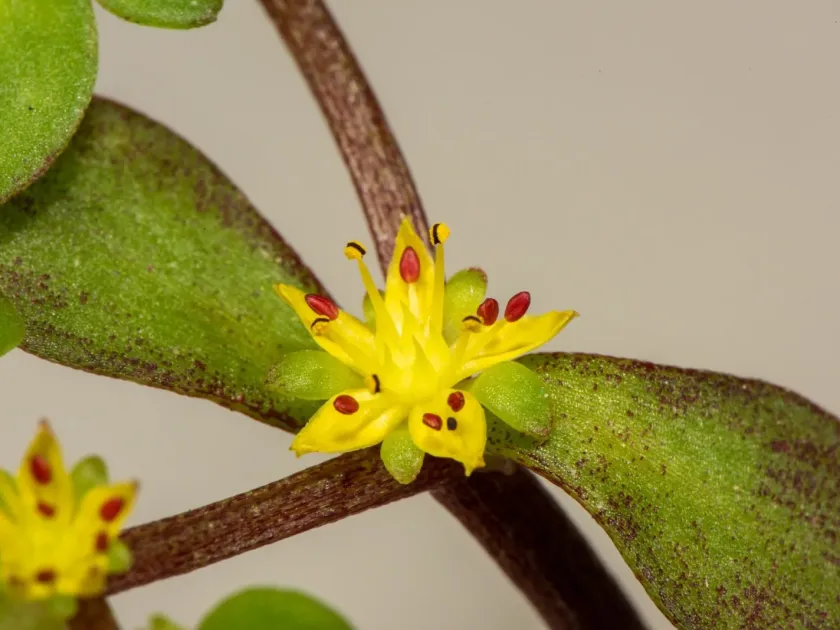
The plant features succulent, rounded foliage on trailing stems that form a dense, mat-like groundcover. It is valued for its evergreen nature in temperate climates and its ability to spread effectively over open spaces.
Successful cultivation of Sedum makinoi requires well-drained, porous soil. While it can thrive in poor soil conditions, it performs best when provided with sufficient sunlight, although it can tolerate light shade without losing its form.
Climate requirements include moderate moisture levels; however, the plant is remarkably drought-tolerant once established. It is well-suited for temperate gardens where drainage is prioritized, as stagnant water is the primary enemy of this species.
In agricultural and ornamental applications, this plant is utilized for rock gardens, container arrangements, and as a groundcover to prevent soil erosion. It serves as an excellent low-maintenance choice for modern xeriscaping projects.
Main diseases and pests
The primary agricultural threat to Sedum makinoi is the development of root and stem rot caused by excessive humidity or poor soil drainage. High soil moisture levels create an environment conducive to fungal pathogens that can damage entire populations.
Pests commonly associated with this culture include mealybugs and aphids. These sap-sucking insects settle in the tight leaf axils, depriving the plant of essential nutrients and potentially causing stunted growth and leaf deformation.
Effective management focuses on strictly controlling watering schedules and ensuring that the substrate dries out completely between irrigation cycles. Improving air circulation around the plant is vital to reducing fungal infection risks.
Chemical control measures should utilize targeted insecticides safe for succulents if infestation occurs. Integrated pest management strategies, such as physical removal of affected plant parts, are recommended in early stages of infestation.
Preventative cultural practices also include site sanitation to remove dead organic matter and weeds, which could harbor pests. Maintaining strong, healthy plants through appropriate light and nutrient management significantly improves natural resistance to pests and diseases.