
Burrito sedum
Sedum burrito Moran
Description
Growing requirements
Burrito sedum (Sedum burrito) is a trailing succulent belonging to the Crassulaceae family. Native to the rugged terrains of Mexico, this plant has evolved to store water in its dense, fleshy leaves, allowing it to survive in arid, high-light environments.
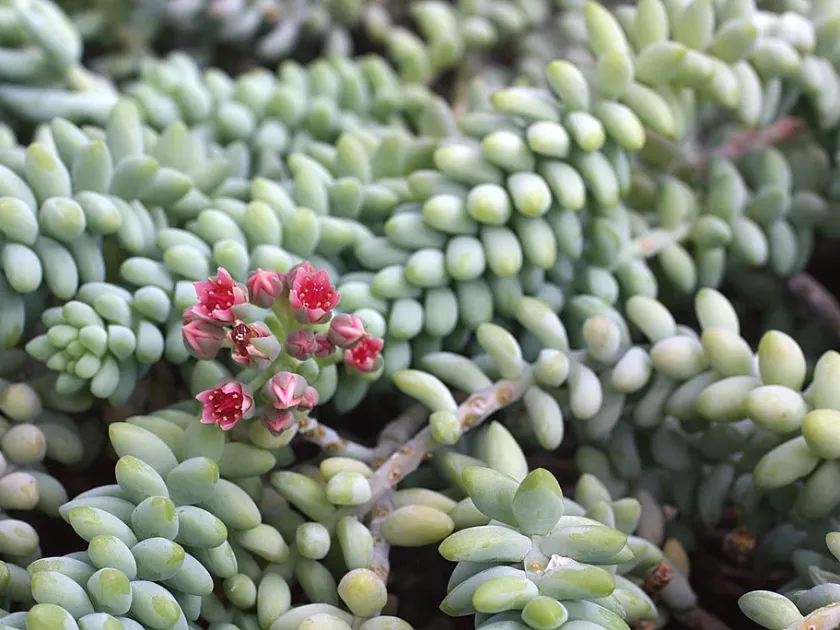
The plant is defined by its long, cascading stems that can reach significant lengths. These stems are densely packed with small, bead-like, lime-green leaves coated in a protective glaucous wax, which provides a natural sunscreen and prevents moisture loss through transpiration.
To maintain optimal growth, this species requires a minimum of six hours of bright, indirect sunlight daily. While it can tolerate direct morning sun, harsh afternoon exposure may scorch the foliage; therefore, placement near a south or west-facing window is recommended for indoor cultivation.
Soil requirements are strict: the medium must be highly porous and inorganic-heavy. Using a standard potting mix is strictly discouraged; instead, a blend of cactus mix, perlite, and coarse sand or pumice is preferred to ensure drainage is instantaneous and no moisture remains around the roots.
In terms of agricultural and horticultural use, the plant is valued for its aesthetic appeal in interior design. It is frequently employed in hanging baskets, vertical succulent gardens, and as a centerpiece in drought-tolerant landscapes within Mediterranean or temperate zones.
Main diseases and pests
The most common biological threats to Sedum burrito include mealybugs, which tend to congregate in the tight junctions between the leaves, and various fungal pathogens. These pests thrive in humid, stagnant air conditions, which also encourage the development of deadly root rot.
Preventative care is critical: maintain proper air circulation around the stems and adhere to a strict watering regimen that allows the soil to dry out completely between sessions. If infestation is detected, physical removal or localized treatment with horticultural soaps is effective.