
Tephrocactus weberi
Tephrocactus weberi
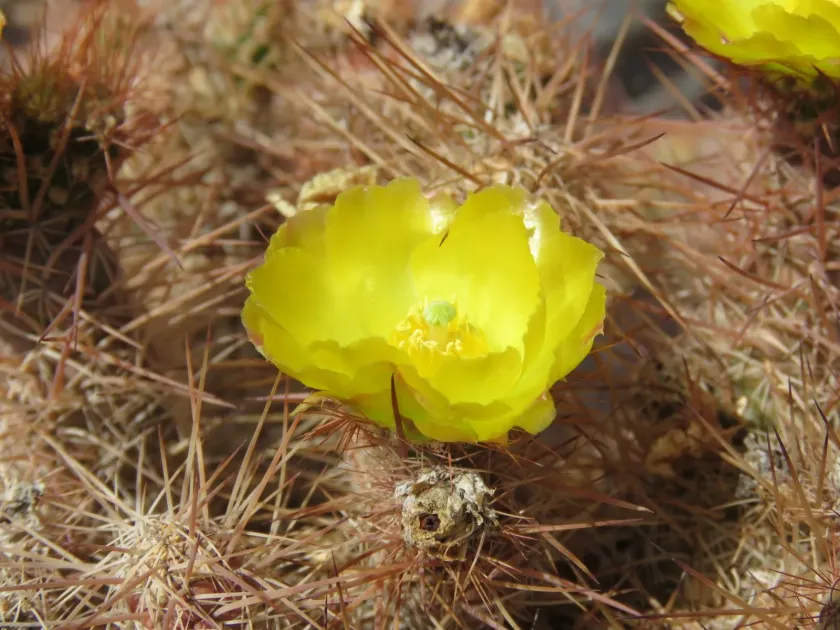
Description
Growing requirements
Tephrocactus weberi is a perennial succulent species belonging to the Cactaceae family. Native to the high-altitude regions of Argentina, this plant has evolved to thrive in harsh, stony environments with excellent drainage.
Botanically, this species is characterized by its segmented stem structure, with individual articles covered in robust, often needle-like spines. It is highly valued in specialty horticulture and cactus collections for its unique architectural form.
For successful cultivation, the plant requires high light intensity. It is essential to provide full exposure to sunlight throughout the growing season to maintain its compact growth habit and natural coloration.
The growing medium must be highly inorganic, consisting of coarse sand, perlite, and fine gravel. High organic content in the soil should be avoided, as it retains too much moisture and creates a risk of root rot.
During the dormant season, which typically occurs in winter, Tephrocactus weberi requires a dry period with cool temperatures. This rest cycle is crucial for the plant's physiological health and is a prerequisite for flowering in the following season.
Main diseases and pests
The primary threat to Tephrocactus weberi is improper irrigation, specifically overwatering. Excess moisture in the root zone quickly leads to root decay, which is often fatal if not diagnosed in its early stages.
Pest management is another critical aspect of its care. Spider mites are common pests that thrive in dry indoor conditions and can cause significant damage to the plant's epidermis, leaving behind chlorotic patches.
Mealybugs are also frequently encountered, tending to hide between the segments of the cactus. Their presence can be identified by the characteristic cotton-like white masses, which require manual removal or insecticidal treatment.
Fungal infections can occur if the plant is kept in an environment with poor air circulation and high humidity. It is vital to ensure that the cactus is kept in a well-ventilated space to promote evaporation.
To ensure healthy growth, always inspect new specimens before introducing them to an established collection. Quarantine procedures for new plants help prevent the spread of soil-borne pathogens and common succulent pests.