
Tephrocactus molinensis
Tephrocactus molinensis
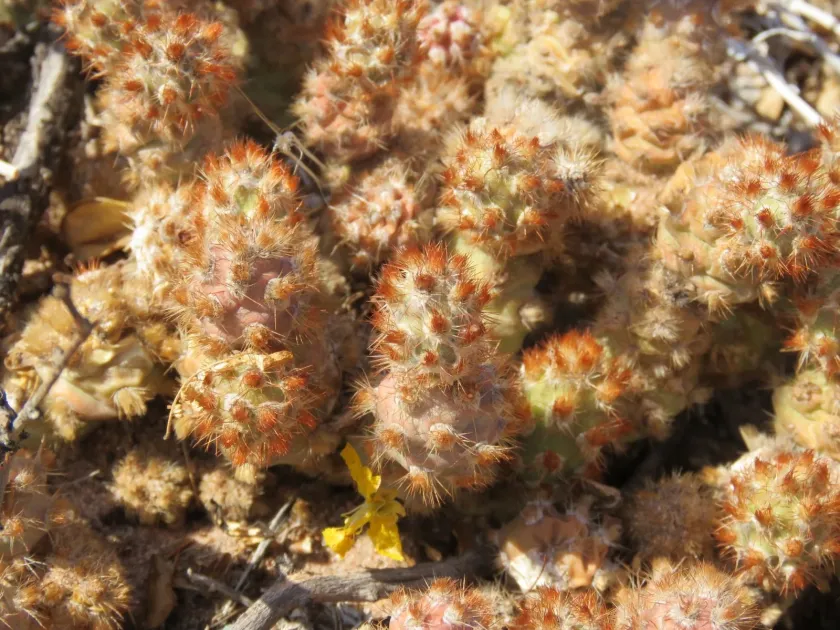
Description
Growing requirements
Tephrocactus molinensis is a distinctive succulent belonging to the Cactaceae family. Originating from the high-altitude landscapes of Argentina, this species has evolved to thrive in rocky, well-draining soils with extreme temperature fluctuations.
Botanically, the plant is known for its segmented structure, consisting of globose to egg-shaped stems. These segments are often adorned with delicate spines, which serve as a natural defense mechanism against the harsh environment of its native range.
For optimal development, this species requires a location with high light intensity. Exposure to direct sunlight for several hours a day is essential to maintain the plant's compact form and encourage the development of strong, resilient stems.
The choice of substrate is critical for the health of this culture. A highly porous, mineral-based mix is necessary to ensure rapid drainage. A blend of pumice, coarse sand, and a small amount of grit is considered the gold standard for potting.
Watering practices must mimic the arid climate of its origin. During the growing season, water thoroughly only when the substrate has completely dried out. During the dormant winter phase, keep the plant almost entirely dry to prevent physiological stress.
Main diseases and pests
The primary threat to Tephrocactus molinensis is root rot, caused by excessive moisture remaining in the substrate. To mitigate this risk, ensure the potting container has ample drainage holes and the growing medium remains highly aerated.
Mealybugs are the most common pests that infest this species, often clustering in the crevices between the stem segments. Regular inspection with a magnifying glass is recommended to detect these pests early before a severe infestation occurs.
Red spider mites can also affect the plant, particularly in conditions with low humidity and poor ventilation. They cause cosmetic damage to the plant's epidermis, leaving behind small, discolored spots that reduce the plant's aesthetic value.
Fungal infections can be introduced through contaminated water or unsterilized tools during propagation. Always use clean, sharp implements when removing segments or repotting to minimize the risk of infection.
Over-fertilization with high-nitrogen fertilizers can cause rapid, succulent growth that is weak and susceptible to attacks from pests and pathogens. Use balanced, low-nitrogen fertilizer specifically formulated for cacti and succulents instead.