
Tephrocactus articulatus
Tephrocactus articulatus
Description
Growing requirements
Tephrocactus articulatus is a distinct species belonging to the Cactaceae family. Native to the arid regions of Argentina, this plant has evolved to thrive in harsh, rocky environments with intense light levels.
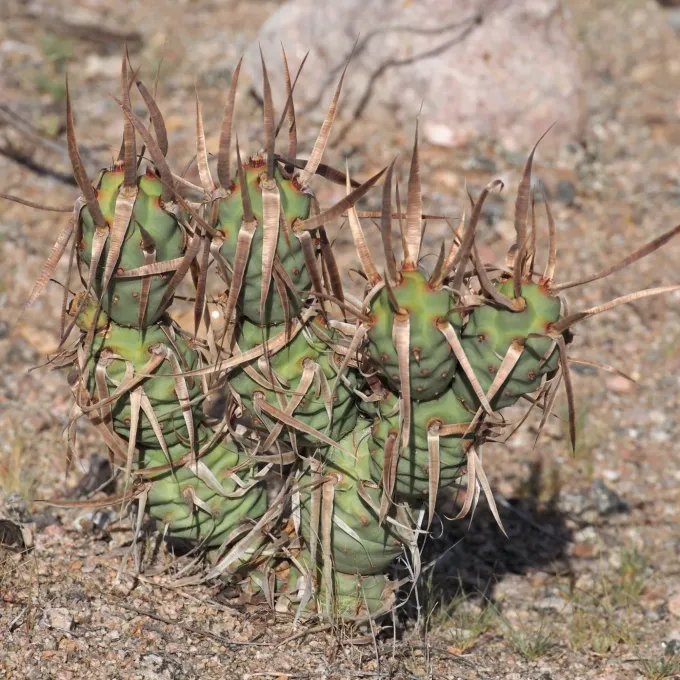
Botanically, it is characterized by its segmented, club-shaped stems that are weakly attached to each other. These segments often feature long, paper-like spines that serve as protection against herbivores in their native habitat.
For cultivation, this species requires a high-drainage, mineral-based substrate. A mixture consisting of coarse sand, pumice, and grit is ideal to prevent moisture accumulation around the root neck.
Sunlight is the most critical factor for the development of healthy segments and characteristic spine growth. Full sun exposure or high-intensity grow lights are necessary throughout the active growing season.
During the dormant period, from late autumn to early spring, the plant must be kept completely dry in a cool environment (5°C to 10°C) to simulate the natural winter cycle of the Argentine highlands.
Main diseases and pests
Root rot remains the primary threat to Tephrocactus articulatus, often caused by overwatering or using a soil mix with too much organic matter that retains moisture for too long.
Mealybugs are the most common pests, frequently hiding between the segments where they are difficult to reach with standard surface treatments, requiring systemic insecticides.
Spider mites may occur during periods of low humidity. These pests feed on the succulent tissue, causing discolored patches and stunted growth that permanently affect the appearance of the cactus.
Fungal infections can develop if the plant is exposed to humid conditions without adequate ventilation. Keeping the plant in a well-ventilated area is essential to prevent such outbreaks.
Regular maintenance, including careful inspection of the stem joints and soil surface, is vital. Prompt removal of damaged or infected segments can prevent the spread of pathogens throughout the plant cluster.