
Swedish whitebeam
Sorbus intermedia (Ehrh.) Pers.
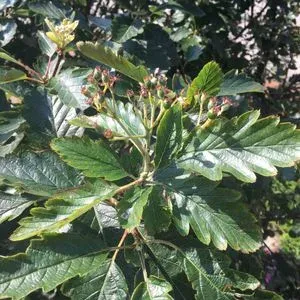
Description
Sowing dates
Sowing seeds of Sorbus intermedia is best performed in the autumn to ensure the seeds undergo a natural stratification process during the winter months.
If seeds are sown in the spring, they must be artificially stratified in a cold environment at temperatures between 1 and 5 degrees Celsius for at least three months before planting.
The seeds should be planted at a depth of approximately 1.5 to 2 centimeters in well-prepared, loose soil to facilitate even germination.
Spacing between rows should be maintained at 25–30 centimeters in nursery settings to allow sufficient room for root development and routine maintenance of seedlings.
It is recommended to protect the sowing site from birds, as the seeds and emerging sprouts can be a target for garden fauna before the plants are established.
Growing requirements
The Swedish whitebeam (Sorbus intermedia) is a member of the Rosaceae family. It is a naturally occurring hybrid known for its exceptional environmental adaptability.
The tree is highly valued for its tolerance to harsh urban conditions, including air pollution, road salt, and compacted or poor-quality soil environments.
It thrives in full sun to partial shade and prefers well-drained, fertile loam, although it is resilient enough to cope with occasional flooding or dry spells.
As a highly frost-hardy species, it is well-suited for colder climates, maintaining its structural integrity and health even during severe winters.
During the first few years after planting, the tree requires consistent watering to establish its root system, after which it becomes relatively drought-tolerant and low-maintenance.
Main diseases and pests
Common diseases affecting Swedish whitebeam include leaf rust and scab, which tend to proliferate in conditions of high humidity and lack of air circulation within the canopy.
Powdery mildew can occur on young leaves during warm, stagnant periods, often requiring fungal preventative measures or physical cleaning of infected parts.
Insect pests, such as aphids and various leaf-eating beetles, may occasionally attack the tree, potentially causing cosmetic damage to the foliage.
Maintaining clear, healthy bark and pruning away dead or crossing branches helps reduce the risk of secondary infections and pest colonization.
Regular monitoring of the tree canopy during the active growing season allows for early detection of issues, preventing significant stress to the overall structure of the tree.
Harvesting
The fruit of the Swedish whitebeam matures in late autumn, typically turning a bright orange-red color that adds significant aesthetic value to the garden.
While the berries are edible, they are mostly left on the tree to serve as a food source for local bird populations during the winter months.
For propagation purposes, seeds should be harvested once the fruits are fully ripe, cleaned, and stored in a cool, dry place until they are ready for stratification.
Harvesting for culinary use is less common, but the fruits can be processed into jams or jellies if they are treated to remove some of their natural astringency.
Ultimately, the harvest is largely managed for ecological benefits, contributing to the biodiversity of the surrounding area by providing food for wildlife.