
Swedish whitebeam
Sorbus hybrida L.
Description
Growing requirements
The Swedish whitebeam (Sorbus hybrida L.) is a remarkable member of the Rosaceae family, recognized as a natural hybrid of the common rowan and the common whitebeam. It is widely prized for its ornamental value and its robust performance in various landscaping projects.
This tree thrives in temperate climates, demonstrating exceptional cold hardiness and the ability to withstand harsh winters. It prefers open, sunny locations where it can fully develop its characteristic crown and foliage, though it maintains structural integrity even in partial shade.
When selecting a planting site, it is important to ensure well-draining soil, as this species is sensitive to waterlogged conditions. It grows most vigorously in fertile, neutral-to-slightly-acidic loam, which supports the tree's development from its early stages through maturity.
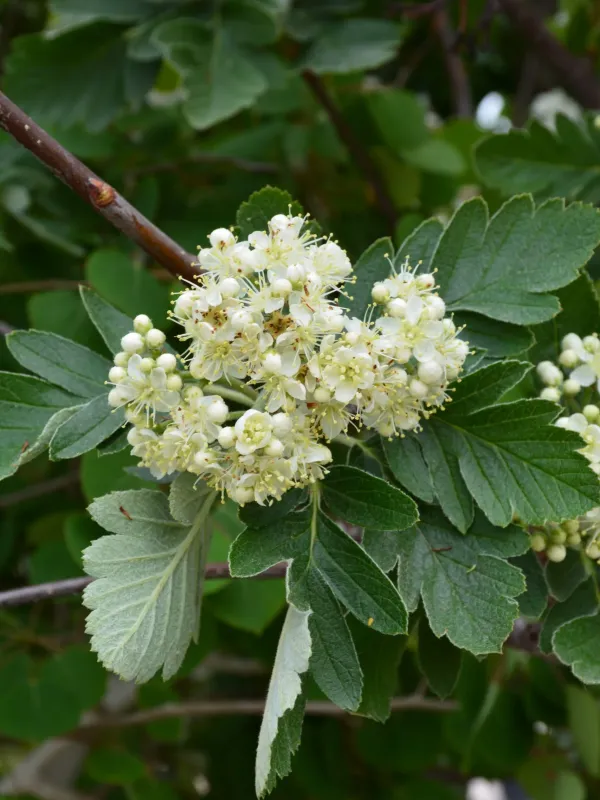
Botanically, the tree is distinguished by its unique leaf structure, displaying a lobed appearance that is both decorative and distinct from other species. Its white spring flowers and bright red autumn fruits make it a highly desirable candidate for both public and private ornamental forestry.
Regarding its utility, the tree serves as an excellent feature plant for urban streets and parks due to its resilience against pollution. Furthermore, its berries are harvested for culinary purposes, providing a nutritious base for jams, jellies, and traditional fermented beverages.
Main diseases and pests
The tree may be susceptible to fungal diseases such as leaf rust and powdery mildew, especially in regions with prolonged humidity. Implementing proper spacing and pruning techniques is essential to ensure adequate air circulation and to minimize the risk of infection.
Pests like aphids and leaf-eating caterpillars can occasionally impact the plant's health. Growers are encouraged to use integrated pest management strategies, focusing on biological controls to maintain the health of the tree while preserving the ecosystem in the surrounding garden area.