
Strumaria
Strumaria hybrids
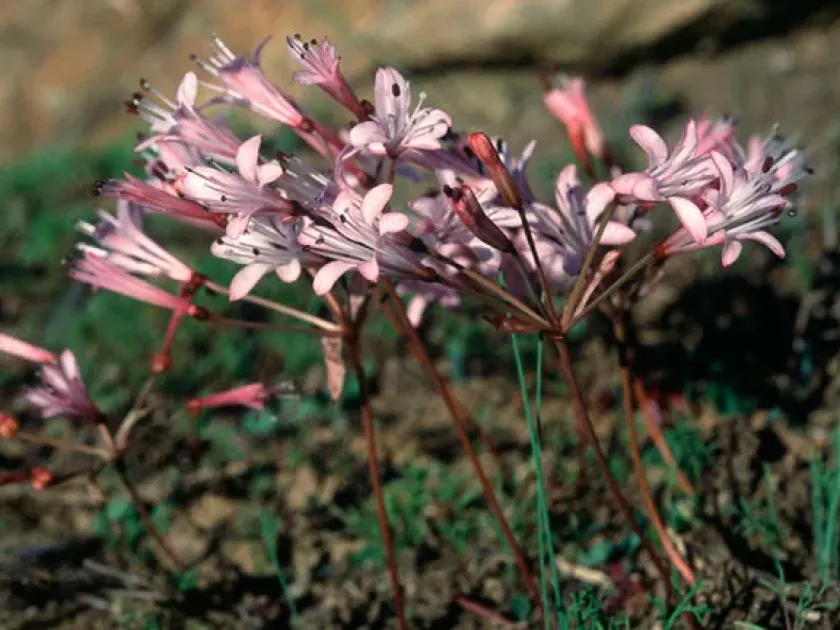
Description
Growing requirements
Strumaria is a genus of perennial bulbous plants belonging to the Amaryllidaceae family. Originating primarily from Southern Africa, these plants have adapted to diverse rocky and sandy environments.
The morphology of the plant includes a distinct bulb, which acts as the primary storage organ for nutrients. The leaves are typically narrow, linear, or strap-shaped, often emerging during the wet season.
Successful cultivation requires a well-drained growing medium, as the bulbs are highly susceptible to rot. A mixture of horticultural sand, grit, and organic compost is usually recommended for optimal aeration.
The climate requirements involve a distinct seasonal cycle. Plants need a warm, active growing phase followed by a dry, cooler dormant period to trigger the next flowering cycle.
Light intensity plays a crucial role in the development of inflorescences. Strumaria species perform best when exposed to bright, indirect sunlight or filtered light throughout the day.
Main diseases and pests
The most significant threat to Strumaria bulbs is basal rot caused by poor soil drainage. If the substrate remains waterlogged, the basal plate decays rapidly, leading to the total loss of the bulb.
Pests such as mealybugs often hide between the leaf bases or scales. Their presence causes stunted growth and introduces secondary viral or bacterial infections to the plant tissue.
Fungal pathogens like Botrytis cinerea can affect the foliage if humidity levels remain too high without adequate air circulation. This requires frequent monitoring in greenhouse conditions.
Improper storage conditions for dormant bulbs often lead to desiccation or dehydration. Maintaining a stable, cool, and dry environment is essential for long-term bulb viability.
Integrated pest management, including regular inspection and the use of targeted biological or chemical treatments, is recommended to keep the plants healthy and vigorous.