
Strumaria discifera
Strumaria discifera
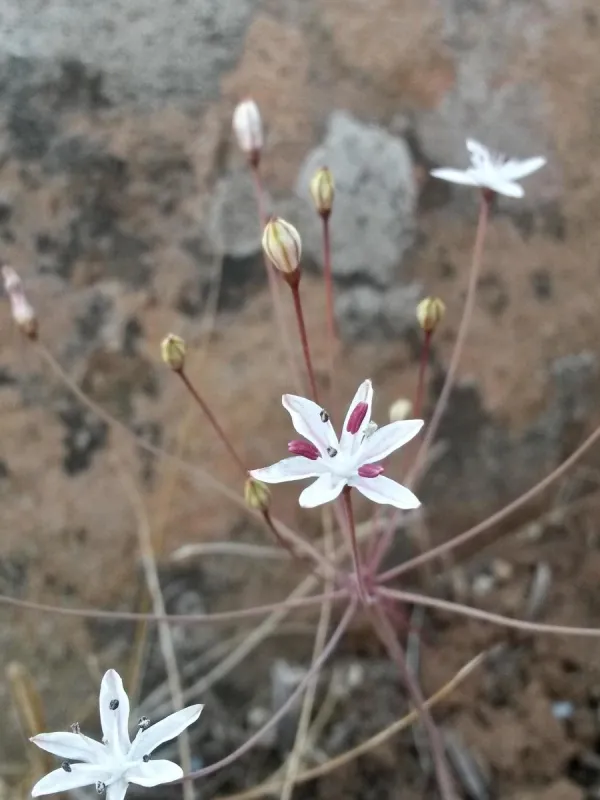
Description
Growing requirements
Strumaria discifera is a rare bulbous plant species belonging to the family Amaryllidaceae. Native to the arid regions of Southern Africa, it has evolved specific physiological mechanisms to survive in environments with unpredictable rainfall patterns.
The plant features a specialized bulb designed for storing water and nutrients, which is vital for its survival during long dormant periods. Its foliage is typically narrow and appears in response to moisture, representing a classic adaptation to its natural habitat.
Cultivation requires a highly porous, sandy substrate that mimics natural rocky soils. Proper aeration of the root zone is mandatory; even minimal water stagnation can lead to rapid decay of the delicate root system and the bulb itself.
The environmental requirements include a hot, dry summer dormancy period and a cooler growing season. In most regions, this plant is treated as an indoor or greenhouse specimen, requiring precise light and temperature management to thrive.
Economically, Strumaria discifera is primarily valued in the specialty horticulture market and among botanical enthusiasts. Its ornamental appeal lies in the delicate, uniquely shaped inflorescences that make it a prized addition to specialized bulb collections.
Main diseases and pests
The primary threats include fungal pathogens that target the bulb during periods of incorrect irrigation. Avoiding water accumulation in the growing medium is the most effective prevention strategy against rot-related mortality.
Insect pests, particularly spider mites and thrips, pose a threat to the leaves and flower stalks in confined spaces. Maintaining adequate air circulation and regular monitoring are essential components of maintaining the health of the plant.