
Giant sacaton
Sporobolus wrightii Munro ex Scribn.
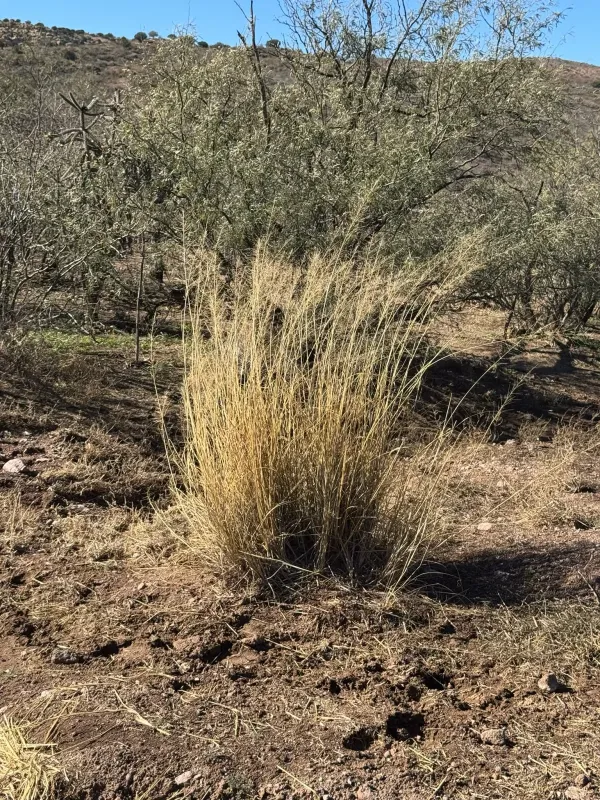
Description
Sowing dates
Giant sacaton is a perennial bunchgrass belonging to the Poaceae family. Sowing is best carried out at the beginning of the growing season when the soil has sufficiently warmed and the risk of frost has passed.
The optimal soil temperature for germination ranges from 15 to 22 degrees Celsius. It is crucial to maintain adequate moisture in the topsoil during the first few weeks to ensure uniform seedling emergence.
Seeds should be sown at a depth of 1 to 2 centimeters. Shallow sowing often leads to desiccation, while planting too deeply makes it difficult for the delicate seedlings to penetrate the soil surface.
While natural reproduction often occurs through self-seeding, agricultural practices involve both direct seeding and transplanting to establish specialized stands. Seeding rates are adjusted based on the specific land management goals.
Fall sowing is feasible only in regions with mild winters to allow for natural stratification, though spring planting is generally considered more reliable for most agro-ecological zones.
Growing requirements
Giant sacaton is a highly resilient plant adapted to the arid conditions of the Southwestern United States and Northern Mexico. The species demonstrates remarkable tolerance to high heat and limited atmospheric moisture.
It prefers well-drained alluvial soils and is commonly found in river valleys and floodplains with deep water tables. The plant shows moderate salt tolerance, making it an excellent candidate for restoring degraded or saline-affected lands.
Sunlight is a critical factor for development; the crop requires full sun exposure throughout the day. Under shaded conditions or in overly dense stands, the overall productivity significantly declines.
Despite its high drought tolerance, the plant can withstand periodic flooding during the active growing season, highlighting its remarkable ecological plasticity.
Mineral nutrition should be balanced; while the crop responds well to nitrogen fertilizers, excessive organic matter may lead to lodging of the tall, robust stems later in the season.
Yield
The economic value of Giant sacaton lies in its biomass production, primarily used as forage for livestock during the summer and autumn months. The plant forms large, dense bunches that can reach heights of 1.5 to 2 meters.
Forage yield is highly correlated with precipitation levels during the growing period. Under irrigated conditions, the crop can support multiple cuttings within a single growing cycle.
In addition to its forage value, the species is widely used in landscape architecture and erosion control. Its extensive root system effectively stabilizes soil on slopes and disturbed areas.
The nutritional value of young shoots is suitable for cattle, though as the stalks mature, the fiber content increases rapidly and digestibility decreases accordingly.
Regular maintenance and strategic grazing management allow for high stand productivity for 10 to 15 years without the need for reseeding.
Main diseases and pests
Giant sacaton exhibits high biological resistance to common grass diseases. The main threat to young seedlings can be soil-borne pests, such as wireworms, which may damage the developing root structures.
Under conditions of high humidity and poor air circulation, rust fungi may occur, though serious outbreaks are rare due to the plant's specific leaf architecture.
Weeds are major competitors during the initial establishment phase. It is recommended to use selective herbicides to manage broadleaf weeds during the first year of growth.
Rodents can cause localized damage by consuming young shoots and chewing roots during the dormant winter period. Pest monitoring is essential when establishing large-scale industrial plantations.
Anthropogenic factors, particularly overgrazing, represent the primary threat to stand longevity. Excessive grazing causes soil exposure and encourages the invasion of undesirable weed species.
Harvesting
Hay harvest should be conducted at the heading stage, before seeds fully mature, to maintain maximum nutritional value. It is important to harvest before the stems become too lignified to ensure forage quality.
When using mechanical harvesting equipment, it is recommended to maintain a stubble height of at least 10 to 15 centimeters. This practice promotes nutrient storage in the root crowns and encourages rapid regrowth.
For seed production, harvesting should take place during the waxy ripe stage. Direct combining is the standard method, though care must be taken to minimize losses due to the plant's natural tendency to shatter when fully mature.
After harvesting, proper drying is necessary to prevent mold development. Because of the high density of the stems, the drying process may take longer compared to common meadow grasses.
Storage of the harvested hay should occur in well-ventilated areas or under shelters that prevent direct contact with precipitation, which is critical for preserving the integrity of the plant material.