
Smut grass
Sporobolus indicus (L.) R. Br.
Description
Growing requirements
Smut grass (Sporobolus indicus) is a robust perennial grass belonging to the Poaceae family. Originating from tropical and subtropical regions, it has established itself across diverse ecosystems, demonstrating significant ecological adaptation to varying environments.
The plant is characterized by its tufted growth habit and dense, wiry foliage. Its deep root system allows it to persist under harsh conditions, including nutrient-poor soils, making it a competitive species within various types of grassland habitats.
In terms of climatic requirements, Sporobolus indicus thrives in warm regions with sufficient rainfall. It shows a high tolerance for sunlight and can successfully colonize disturbed sites, which is a common occurrence in overgrazed pastures where competition from other species is reduced.
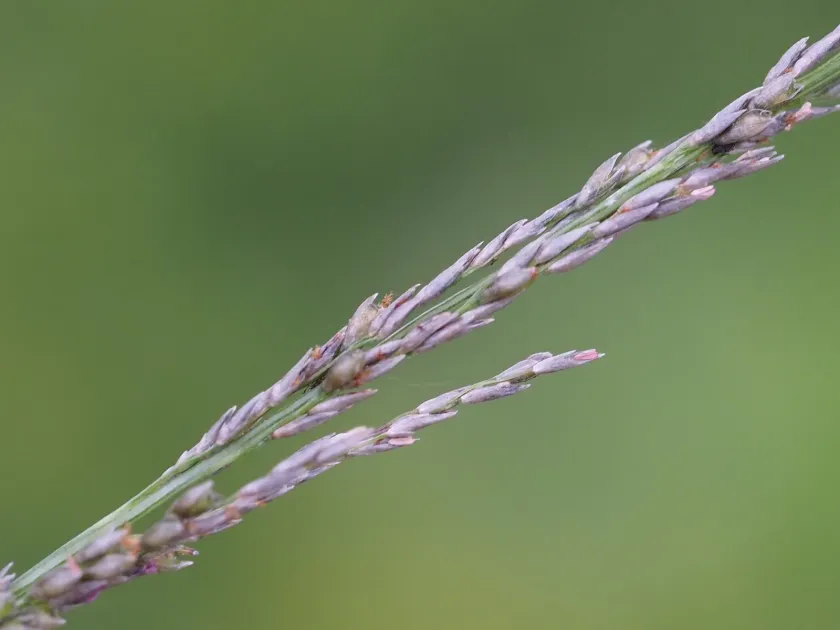
Botanically, the plant produces elongated, tight panicles that are often infected by fungi, which gives the plant its characteristic smutty appearance. Its reproductive efficiency via seeds is high, enabling it to spread rapidly across grazing lands and agricultural frontiers.
Agriculturally, this grass is utilized primarily for cattle grazing. While it becomes less palatable at maturity due to its tough texture, it serves as an important source of biomass in early growth stages, contributing to the total forage availability in extensive livestock systems.
Main diseases and pests
The most notable threat to Sporobolus indicus is the infection by the fungus Bipolaris ravenelii, which creates black, smut-like spores on the seed heads. While this gives the plant its name, it rarely kills the plant but reduces seed viability.
Pest issues are generally minimal, but populations of leaf-sucking insects can sometimes affect vigour in drought-prone conditions. Proper pasture management and strategic mowing remain the primary methods to maintain healthy stands and mitigate unwanted spread.