
Seashore dropseed
Sporobolus virginicus (L.) Kunth
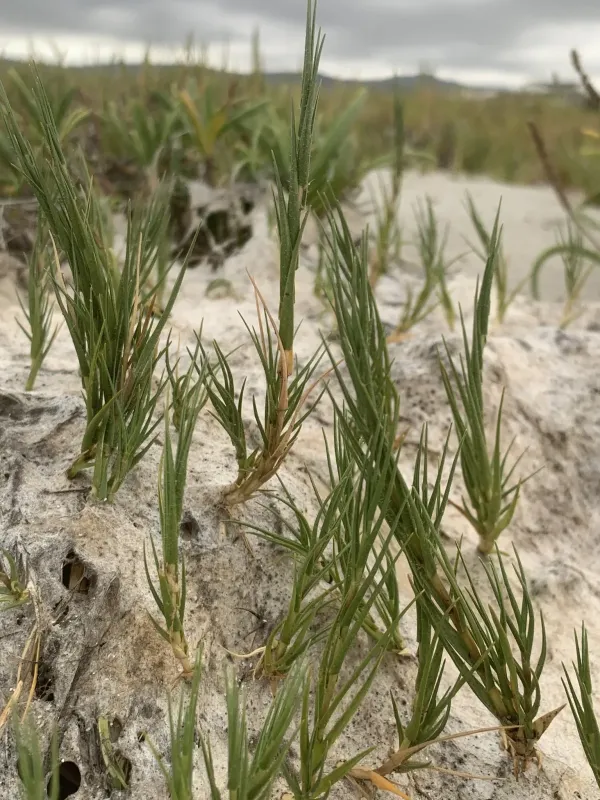
Description
Growing requirements
Seashore dropseed (Sporobolus virginicus) is a perennial grass species belonging to the Poaceae family. Known for its remarkable salt tolerance, it is a key plant for stabilizing sandy substrates in coastal regions worldwide.
The plant is native to tropical and subtropical coastal areas, where it thrives in sandy dunes and salt marshes. Its root system consists of tough, creeping rhizomes that help it spread efficiently across shifting landscapes.
Light requirements for this species are high, as it requires full sun for optimal health. Lack of exposure to direct sunlight results in reduced density and a decline in the overall vigor of the plant community.
Regarding soil preferences, it demands well-drained conditions. While it is highly tolerant of saline environments and salt spray, it does not perform well in waterlogged soil, which can lead to root degradation.
Economically, Seashore dropseed is widely valued for erosion control. Its dense, wiry growth habit makes it an excellent choice for dune stabilization, preventing sand loss during intense storm events.
Main diseases and pests
Fungal diseases, including rusts, may occasionally affect the foliage if humidity levels remain consistently high for extended periods. Maintaining proper spacing and airflow is essential for preventing these issues.
Insect pests are generally not a major concern for this grass, although occasional outbreaks of larvae can cause minor damage. The plant's high regenerative capacity allows it to recover rapidly from such pressure.
Weed competition poses the greatest challenge during the establishment phase. Once the plant forms a mature, dense cover, it is highly effective at outcompeting invasive species and maintaining its ecological niche.
Management practices should include limited mowing if used in landscaping to ensure an even growth habit. Periodic inspections are recommended to ensure that the site remains free of aggressive invasive plants.
Due to its hardiness, Seashore dropseed remains a sustainable solution for coastal management projects. Its ability to thrive in challenging environments minimizes the need for fertilizers or intensive irrigation.