
Sporobolus diandrus
Sporobolus diandrus (Retz.) P. Beauv.
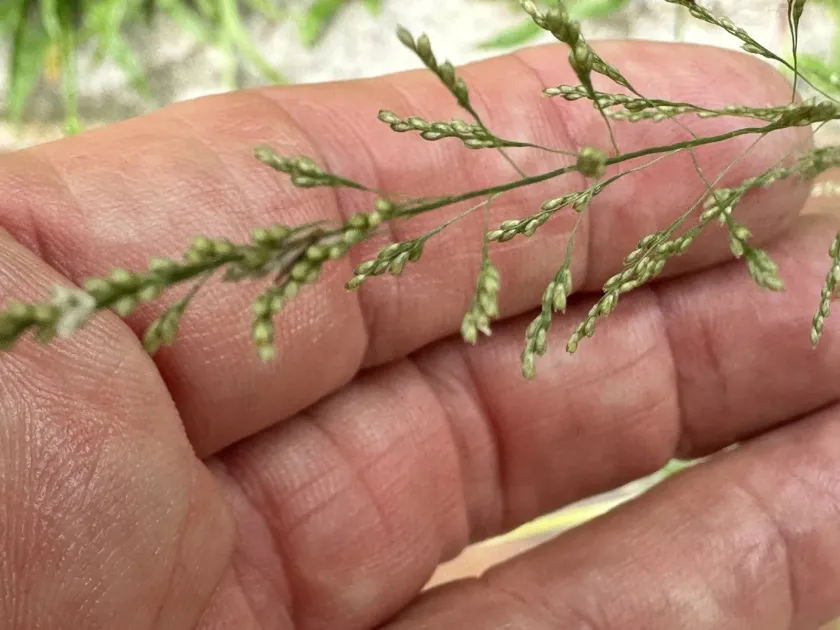
Description
Growing requirements
Sporobolus diandrus, commonly known as a type of dropseed grass, is a perennial plant belonging to the Poaceae family. It is native to tropical and subtropical regions across Asia and Australia, where it thrives in diverse environments ranging from open grasslands to disturbed areas.
This species is highly valued for its adaptability to varying environmental conditions. It grows well in poor, nutrient-deficient soils, demonstrating significant resilience to both drought and occasional waterlogging. It is considered an effective pioneer species for colonizing degraded land.
The botanical structure of Sporobolus diandrus is characterized by dense tufts of narrow, linear leaves and open, spreading panicles. Its deep-reaching root system provides excellent stability to the soil, making it a reliable choice for erosion control projects in arid and semi-arid climates.
In terms of agricultural use, this grass serves as a vital forage resource for livestock. Although its nutritional quality is moderate, its ability to persist under heavy grazing pressure makes it a reliable component of native pastures in warm climates where more sensitive grasses fail.
Beyond its forage potential, the plant is extensively used in phytoremediation and environmental restoration. Its fast growth rate and ability to withstand harsh conditions allow it to stabilize soil, improving structure and preventing further land degradation over time.
Main diseases and pests
Sporobolus diandrus is generally hardy and displays high natural resistance to many common grass diseases. However, in environments with persistent high humidity and stagnant air, fungal diseases such as leaf rust may occur, which can impact the overall health and vigor of the stand.
Pest pressure is usually low, though populations of aphids and certain lepidopteran larvae may occasionally feed on the foliage. Under typical extensive farming conditions, these pests rarely reach levels that require chemical intervention, as the plant recovers quickly.
The primary threat to the stability of Sporobolus diandrus stands is the competition from invasive weeds and woody shrub encroachment. If the area is not managed through regular grazing or controlled fire, the dominant presence of the grass can be compromised by successional vegetation.
Agronomic management to minimize threats focuses on maintaining a vigorous stand through balanced nutrient application. Avoiding overgrazing is critical, as excessive defoliation weakens the root system and reduces the plant's natural resistance to environmental stressors and secondary pests.
Implementing a rotational grazing strategy is the most effective approach to managing health risks. This allows the plant time to recover, maintaining high levels of vigor and ensuring that the sward remains competitive against potential biological threats throughout the growing season.