
Sphaeralcea procera
Sphaeralcea procera
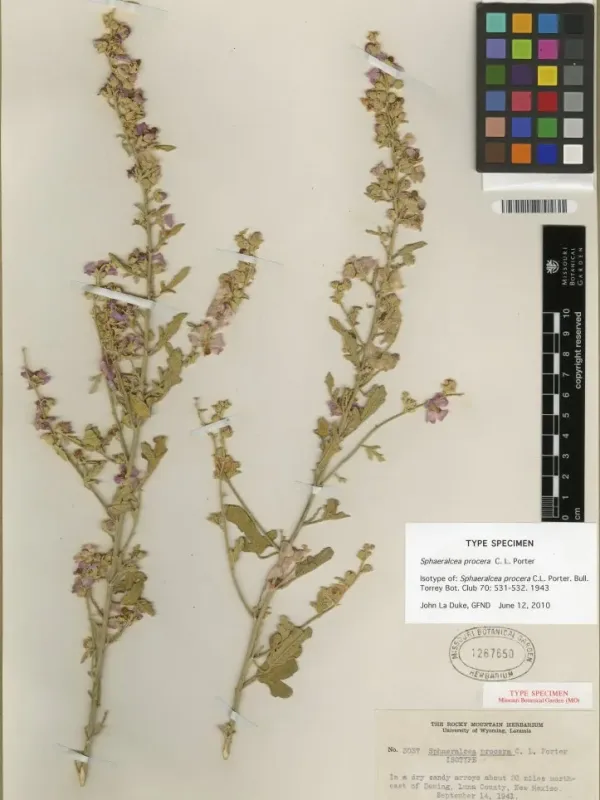
Description
Sowing dates
Sowing Sphaeralcea procera should be done in the spring once the soil temperature is consistently above 15 degrees Celsius for optimal germination rates.
Seeds should be planted at a shallow depth of approximately 1 to 2 centimeters to ensure they have enough energy to emerge through the soil surface.
Precision planting techniques or standard seed drills can be used, ensuring the spacing allows for efficient weed management and nutrient absorption.
Good soil preparation is essential; the seedbed should be firm, fine-textured, and free of large debris that could interfere with early root development.
Once established, the seedlings exhibit vigorous growth, making the crop highly competitive against early-season weeds in well-managed fields.
Growing requirements
Sphaeralcea procera belongs to the Malvaceae family and is native to the arid regions of North and Central America, thriving in harsh environments.
It prefers well-drained, sandy or loamy soils and is highly adapted to soils with low fertility, often outperforming other crops in challenging conditions.
Full sun exposure is vital for this plant, as it requires high light intensity for maximum biomass accumulation and healthy flower development.
Drought tolerance is one of the main agricultural advantages of this species, thanks to its deep and resilient root system developed over time.
While it is drought-tolerant, supplemental irrigation during the seedling stage can significantly improve stand establishment and future yields.
Yield
Yield performance in Sphaeralcea procera is largely determined by site selection and the plant's ability to maximize photosynthetic activity during the season.
As a forage crop, it provides multiple harvests throughout the growing cycle, particularly when managed with strategic cutting regimes.
The nutrient profile of the harvested biomass makes it a potentially valuable component in livestock feed rations during drier periods of the year.
Seed yield varies depending on the success of pollination, which is highly influenced by local insect activity and favorable weather conditions.
Continuous harvest management ensures that the plant regrows vigorously, providing a sustainable return on investment over several years.
Main diseases and pests
Fungal pathogens are the most significant threat to the crop, especially in regions with high relative humidity or poor soil drainage.
Leaf-feeding insects may occasionally impact the foliage, though the plant's natural resilience often mitigates long-term damage.
Proper field hygiene and avoiding high-density plantings help reduce the incidence of diseases and the spread of pests throughout the stand.
Integrated pest management strategies should focus on monitoring and cultural controls to maintain the health of the perennial stand.
Early detection of infestations allows for targeted and efficient management, minimizing the need for extensive chemical applications.
Harvesting
The primary harvest for biomass should be timed with the onset of flowering, which ensures the best balance of fiber and nutritional quality.
Mechanical harvesting equipment can be adjusted for height to promote rapid regrowth and maintain the health of the plant's basal structures.
When harvesting for seed production, monitoring the maturation of the fruit is crucial to prevent premature shattering and yield loss.
Post-harvest processing involves thorough drying and cleaning to ensure the longevity of the seeds and prevent contamination.
Effective storage requires dry, cool conditions to preserve the viability of the seed and the nutritional integrity of the harvested forage.