
Emory's globemallow
Sphaeralcea emoryi
Description
Growing requirements
Emory's globemallow (Sphaeralcea emoryi) is a perennial subshrub belonging to the Malvaceae family. It is native to the arid desert regions of the Southwestern United States and Northern Mexico, showcasing high adaptation to desert climates.
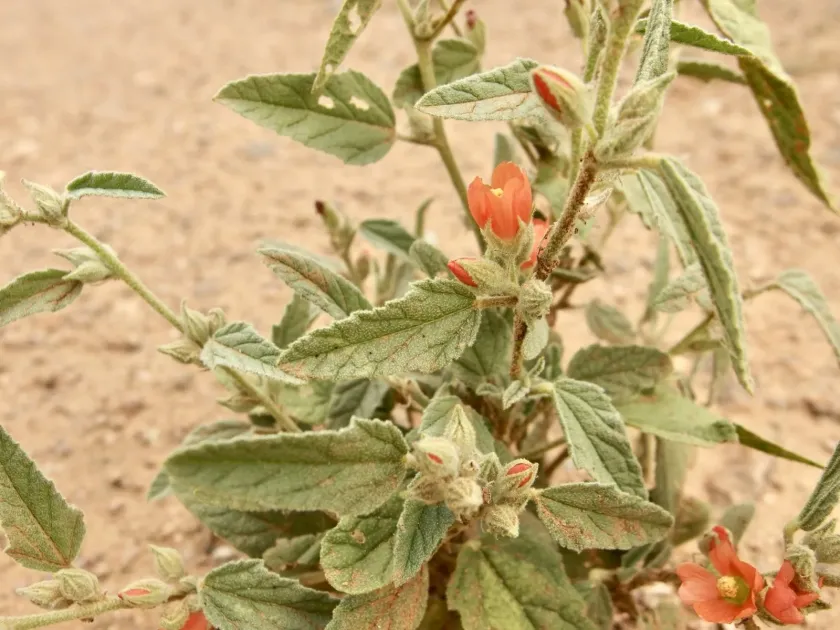
Botanically, it features grayish-green, stellate-pubescent leaves designed to reflect sunlight and conserve moisture. The plant produces vibrant, cup-shaped, reddish-orange flowers that are typical for the genus and contribute to its ornamental and ecological value.
The cultural requirements are strict regarding drainage. It thrives in sandy, gravelly, or well-aerated soils where moisture does not accumulate. It is a highly drought-tolerant species that requires full sun exposure to maintain its compact, healthy growth form.
In terms of agricultural and land management, this plant is used for revegetation projects in arid environments, erosion control, and supporting native pollinators. Its low water requirement makes it an excellent choice for xeriscaping and sustainable desert landscaping.
Cultivation success depends on selecting sites with low humidity and high heat levels. It does not require fertilizers; in fact, rich soils may negatively impact the plant's structural integrity and resistance to common environmental stresses.
Main diseases and pests
Root rot is the most significant threat to Sphaeralcea emoryi, usually triggered by poor drainage or overwatering. Maintaining soil aeration is crucial for the plant's health.
Spider mites are common pests that thrive on these plants in dry conditions. Keeping the plant healthy through correct environmental placement generally limits the impact of these pests.
Fungal diseases like powdery mildew can appear if the plant is subjected to high ambient humidity or poor air circulation within the planting area.
Weed competition during the seedling stage is a primary concern, as the plant exhibits slow initial growth. Manual weeding is often required until the plant is established.
Preventative measures include ensuring spacing between individual plants to promote airflow and avoiding irrigation methods that wet the foliage directly.