
Sphaeralcea angustifolia
Sphaeralcea angustifolia
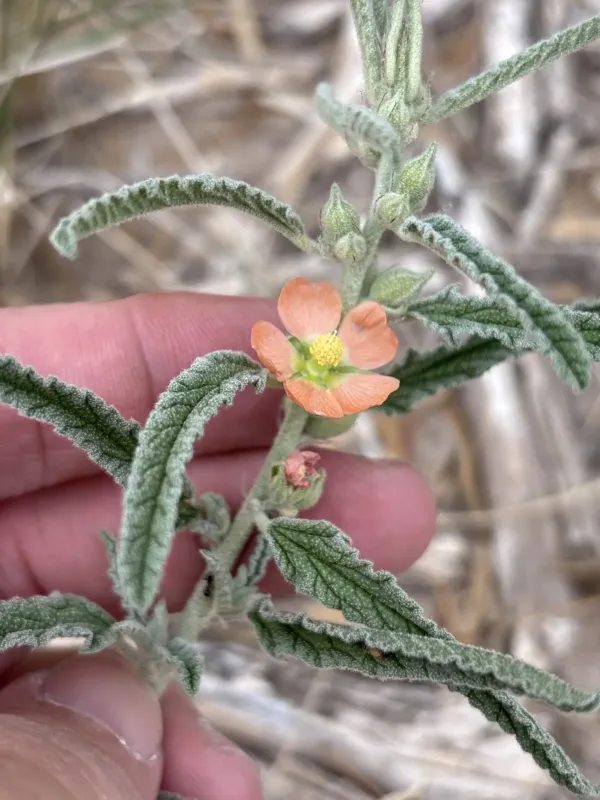
Description
Sowing dates
Sphaeralcea angustifolia, commonly known as the narrowleaf globemallow, is a perennial subshrub belonging to the Malvaceae family. It is native to the arid regions of North America and is highly valued for its ability to thrive in extreme environments.
For agricultural purposes, seeds should be sown in late spring once the soil temperature is consistently warm. Shallow planting is recommended as the seeds are small and require minimal soil coverage to trigger germination effectively.
Proper spacing between rows is essential to ensure that each plant receives maximum sunlight, which is vital for the development of healthy, robust plants. As a slow-growing species in its early stages, weed suppression is critical during the first season.
The establishment phase relies heavily on the plant's ability to develop its root system. Once the roots are established, the plant becomes remarkably self-sufficient, significantly reducing the need for constant maintenance by the grower.
Successful sowing involves creating a favorable environment that allows for early vigor. In large-scale operations, mechanical drilling with precise depth control is the preferred method to achieve uniform plant density across the field.
Growing requirements
This crop is exceptionally well-adapted to poor, rocky, or sandy soils where traditional crops often fail. Its deep root system allows it to exploit soil nutrients and moisture from lower layers, making it highly resilient to harsh conditions.
Water requirements for Sphaeralcea angustifolia are among the lowest of any potentially cultivated crop. It is a true xerophyte, capable of maintaining growth throughout prolonged drought periods without the need for supplementary irrigation.
Sunlight is the primary driver of development for this species. It is strictly photophilous, meaning it requires full sun exposure to maintain its physiological health, produce biomass, and complete its reproductive cycle.
Temperature tolerance is a hallmark of this plant. It is perfectly adapted to the high temperatures characteristic of desert and semi-arid climates, where it can continue photosynthetic activity when other plants go into dormancy.
Soil management for this plant focuses on maintaining good aeration. It performs poorly in compacted or waterlogged soils, as its roots require constant oxygen to prevent physiological stress and potential root-rot issues.
Main diseases and pests
One of the primary benefits of cultivating Sphaeralcea angustifolia is its high level of natural resistance to common pathogens. It is rarely impacted by the typical pests that plague more sensitive agricultural cultivars.
Fungal diseases are generally non-existent in its natural habitat, although in dense stands with poor airflow, minor occurrences of powdery mildew may occur. Improving site drainage is usually sufficient to mitigate these risks.
Arthropod pests, while present in arid ecosystems, rarely reach economic threshold levels on this plant. The plant's tough, often pubescent foliage serves as a physical barrier that discourages many common herbivorous insects.
Root health is maintained naturally by the plant's adaptation to arid environments. As long as the soil remains well-drained and the root zone is not subjected to standing water, the risk of disease is negligible.
For sustainable agricultural systems, this plant offers a low-input solution, requiring almost no chemical intervention for pest or disease control throughout the entire vegetation period of the crop.