
Sphaeralcea orcuttii
Sphaeralcea orcuttii
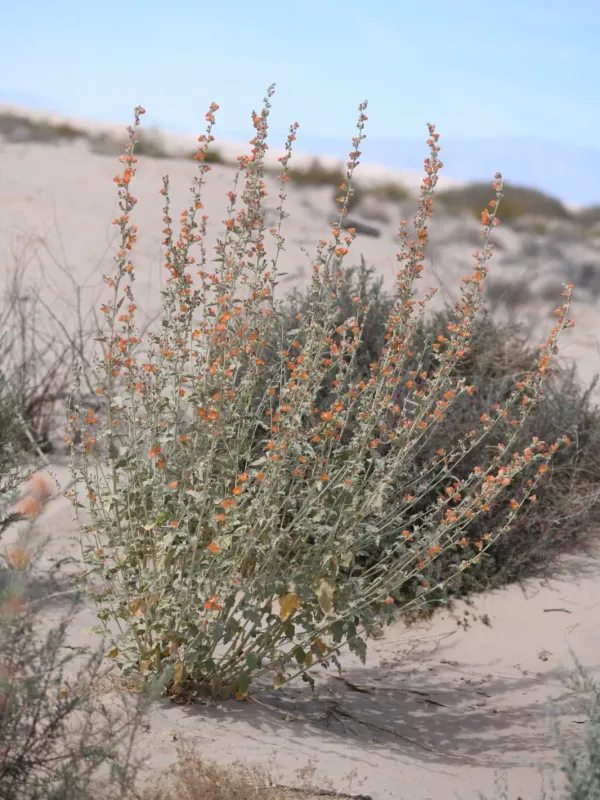
Description
Growing requirements
Sphaeralcea orcuttii, commonly known as Orcutt's globemallow, is a perennial herbaceous plant belonging to the Malvaceae family. It is a highly specialized plant native to arid environments.
The natural range includes parts of the Sonoran and Colorado deserts. It has evolved to survive with minimal rainfall, utilizing efficient water-retention mechanisms in its leaves and stems.
The plant thrives in sandy or rocky soil types characterized by excellent drainage. It does not tolerate waterlogged conditions, which can lead to rapid root degradation.
Botanical characteristics include a complex root system and distinctive lobed foliage, which helps in thermal regulation during high-temperature periods.
Cultivation requires significant exposure to direct sunlight. In an agricultural context, it serves as a stabilizer for loose desert soils and provides biomass in harsh climates.
Main diseases and pests
The primary threat to Sphaeralcea orcuttii under cultivation is root rot, typically caused by fungal pathogens when soil drainage is insufficient.
Pests such as aphids and spider mites can infest the foliage, particularly if the plant is grown under stressful drought conditions that weaken its natural defenses.
Invasive weeds can compete with young seedlings for nutrients and water, necessitating early-stage weeding to ensure the establishment of the crop.
Fungal leaf spot diseases may appear during periods of high humidity or uncharacteristic rain events, reducing the overall leaf quality of the plant.
Effective management involves maintaining adequate spacing between plants and ensuring that irrigation systems do not create standing water around the base.