
Scarlet globemallow
Sphaeralcea coccinea
Description
Sowing dates
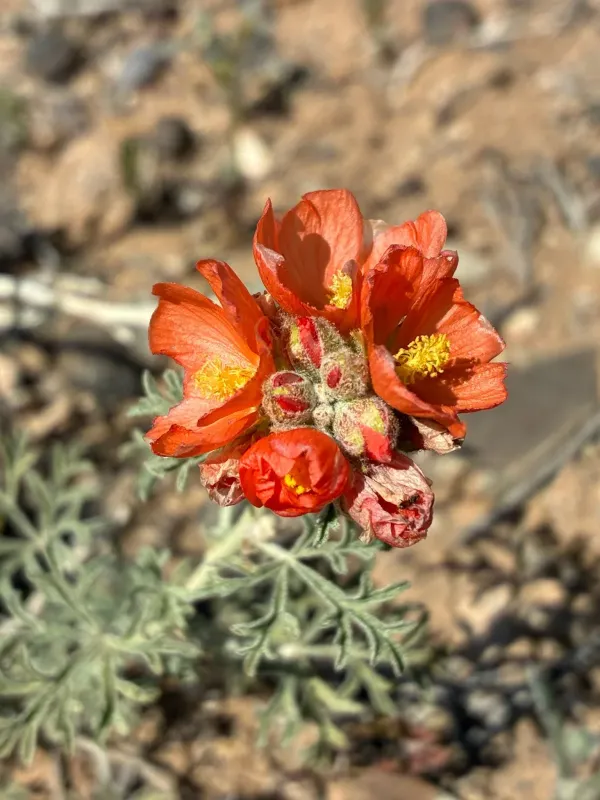
Scarlet globemallow, or Sphaeralcea coccinea, is a hardy perennial belonging to the Malvaceae family. It is native to the arid grasslands and prairies of North America.
Seeds are typically sown in early spring. They require minimal depth for burial, as light exposure assists the germination process of this hardy wildflower.
Propagation can also be achieved through root cuttings taken in the autumn or early spring, ensuring the plant has enough time to establish before intense summer heat.
When sowing in trays, it is recommended to use a sterile, gritty mix to prevent any fungal issues during the initial growth phase of the seedlings.
Once established, the plant spreads through an extensive root system, making it an excellent candidate for erosion control in dry landscapes.
Growing requirements
The primary requirement for Sphaeralcea coccinea is full sun. It thrives in locations that receive at least eight hours of direct sunlight daily.
Soil drainage is critical. The plant is perfectly adapted to poor, rocky, or sandy soils and will struggle in heavy, damp, or nutrient-rich garden soils.
Watering should be very limited. Once the plant is established, it requires no supplemental irrigation, as it is highly drought-tolerant by nature.
It prefers alkaline or neutral soil pH levels. Adding organic matter, such as compost, is generally unnecessary and may even be detrimental to plant health.
Climate adaptability is one of its strongest features, as the plant can withstand extreme temperature fluctuations characteristic of prairie ecosystems.
Main diseases and pests
Fungal pathogens are the main threat, specifically those that flourish during periods of high humidity or poor drainage in the root zone.
Powdery mildew may occur if the plants are crowded together without sufficient air circulation, resulting in unsightly white patches on the foliage.
Spider mites can occasionally infest the plant during prolonged dry spells, causing leaf stippling and overall loss of vigor if left untreated.
Root rot is the most serious risk, often caused by heavy rainfall or over-irrigation on clay soils that lack proper drainage characteristics.
Maintenance to reduce threats includes thinning crowded plantings to increase airflow and removing any diseased debris from the base of the plant during the dormant season.
Harvesting
Harvesting seeds for future propagation is a standard practice for this plant. Seed heads are collected once they turn dry and brown on the stalks.
The capsules should be dried in a well-ventilated area before being threshed to release the small seeds, which are then cleaned of debris.
For ornamental or research purposes, the stems can be cut back after the main flowering flush to encourage a second, smaller bloom in the late season.
Cutting back the foliage at the end of the season assists in winter management, though leaving the dried stems can provide winter interest and seeds for birds.
When collecting material, always ensure that at least a portion of the population remains undisturbed to support local pollinators and natural self-seeding cycles.