
Spanish heath
Erica australis L.
Description
Growing requirements
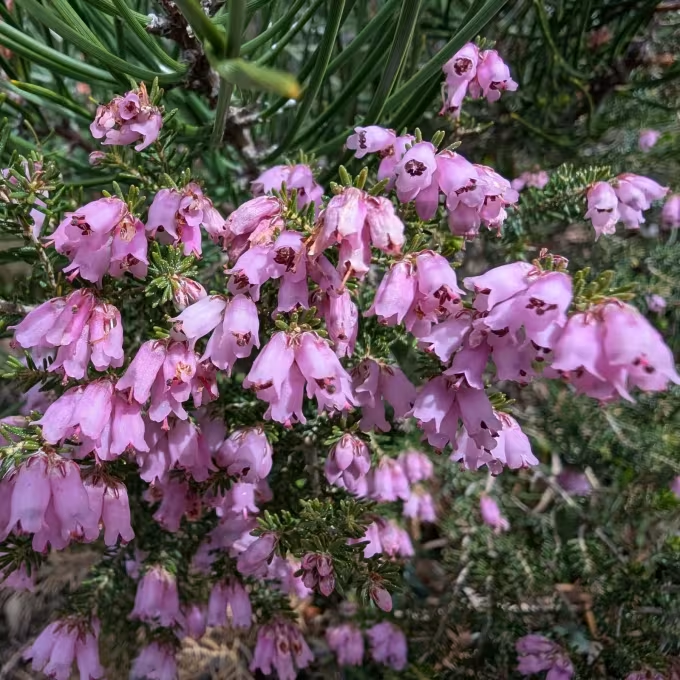
Spanish heath (Erica australis L.) is a perennial evergreen shrub belonging to the Ericaceae family. Known for its elegant growth habit, this species features needle-like leaves and produces vibrant pink or purple bell-shaped flowers that create a stunning visual impact.
Native to the southwestern parts of Europe, specifically the Iberian Peninsula, and parts of Northwest Africa, this shrub thrives in Mediterranean environments. It has become a popular choice for gardeners seeking to add structure and color to acidic, well-draining garden beds.
The cultural success of Spanish heath is strictly dependent on soil conditions. It requires acidic soil with a pH typically between 4.5 and 5.5. Soil enrichment with peat moss or pine bark is highly recommended to mimic its natural, nutrient-poor, and acidic habitat.
Optimal growth occurs in full sun, where the plant can develop a compact and bushy form. While it is moderately hardy, protection from harsh, desiccating winds during winter is essential to maintain the integrity of its evergreen foliage.
Regular maintenance involves light pruning after the flowering season. This practice not only enhances the aesthetic shape of the plant but also promotes denser growth for the following year, preventing the bush from becoming overly woody and sparse.
Main diseases and pests
Root rot is the most significant threat to Erica australis, usually caused by poor drainage or overwatering. Maintaining a porous, light soil structure is vital to prevent water stagnation, which is the primary cause of mortality in cultivated heath specimens.
Pests such as scale insects and spider mites can infest the foliage, particularly in environments with low humidity. Monitoring the undersides of leaves and using horticultural oils or insecticidal soaps can manage these populations before they cause significant damage.
Chlorosis, manifesting as yellowing leaves, is a common indicator that the soil pH has risen too high. This physiological issue prevents iron uptake and is frequently triggered by using hard, tap water for irrigation, which introduces alkaline minerals into the root zone.
Fungal diseases like grey mold (Botrytis) can develop in poorly ventilated areas or during periods of high humidity. Ensuring adequate spacing between plants and avoiding overhead irrigation can significantly reduce the risk of such infections.
Winter injury, often termed winter burn, occurs when the plant is exposed to freezing temperatures combined with drying winds. Applying a layer of organic mulch around the base provides necessary thermal insulation for the shallow root system.