
Portuguese heath
Erica lusitanica Rudolphi
Description
Growing requirements
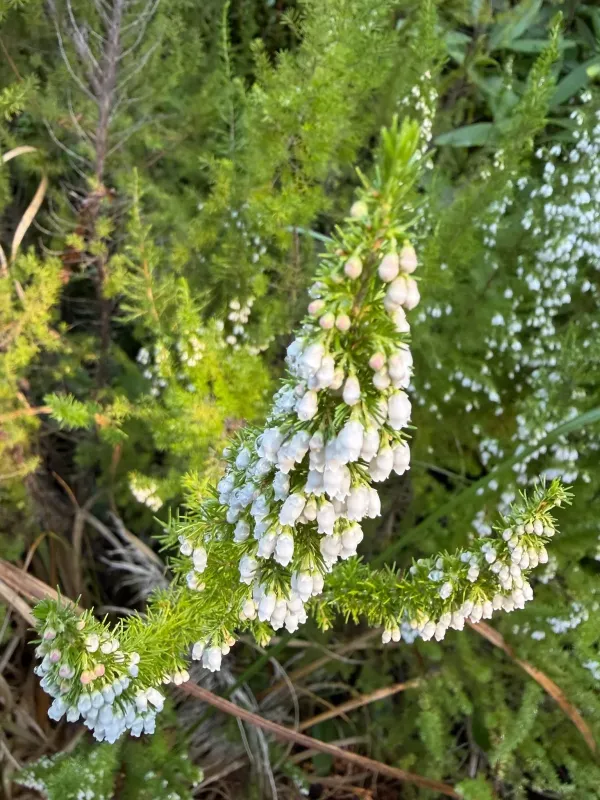
Portuguese heath (Erica lusitanica) is an evergreen shrub belonging to the Ericaceae family, widely recognized for its elegant, bell-shaped flowers.
Originating from southwestern Europe, specifically the Iberian Peninsula, it has adapted to mild maritime climates with consistent precipitation.
Successful cultivation requires acidic, well-draining soil, as the roots are sensitive to waterlogging and poor soil aeration.
The plant thrives in sunny to semi-shaded positions and benefits from protection against cold, drying winds that can affect leaf health.
In landscaping, this species is valued for its architectural shape and as a significant source of nectar for pollinators during the blooming season.
Main diseases and pests
Root rot is the most serious threat to Erica lusitanica, usually caused by heavy soil or improper drainage management in the garden.
Pests such as spider mites can infest the foliage, particularly in environments with low humidity, causing visible damage to the plant's health.
Chlorosis is a frequent issue if the soil becomes too alkaline, preventing the shrub from absorbing vital nutrients necessary for deep green growth.
Fungal infections can spread rapidly in crowded plantings, making spacing and proper air circulation essential for long-term health.
Monitoring the soil pH and performing annual pruning are the most effective strategies for preventing infestations and maintaining a vigorous plant.