
Umbrella whitebeam
Sorbus umbellata (Desf.) Fritsch
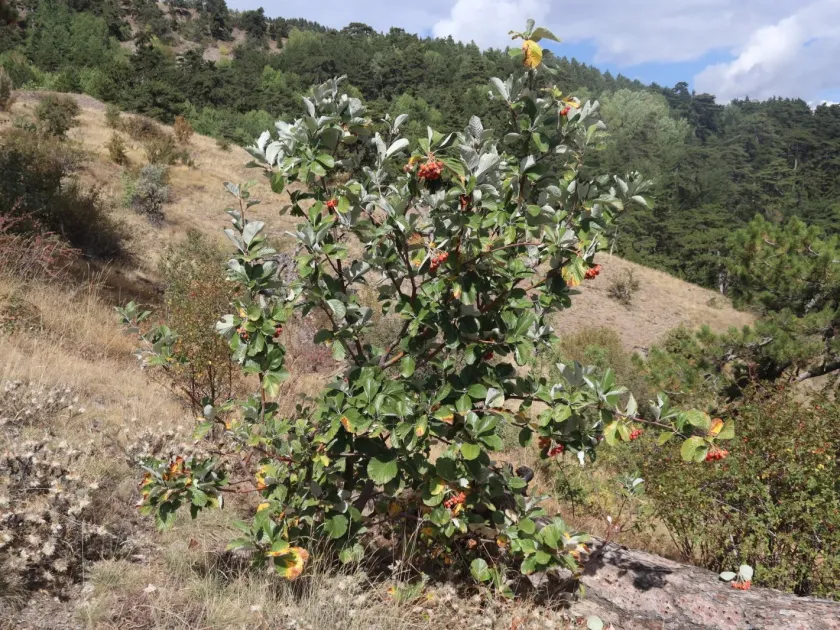
Description
Growing requirements
Umbrella whitebeam (Sorbus umbellata) belongs to the Rosaceae family. It is a hardy, deciduous tree or large shrub highly regarded in horticulture for its naturally compact, umbrella-like crown shape.
Originating from the mountainous regions of Southern Europe and Turkey, the species is naturally adapted to rocky and lime-rich soils. It thrives in open, sunny locations where it can express its full ornamental potential.
The plant is relatively undemanding regarding soil quality but requires excellent drainage. Waterlogged conditions can lead to root decay, so planting in well-aerated substrates is essential for healthy development.
Climatically, it is a resilient species capable of withstanding moderate drought once established. It displays good cold hardiness, making it suitable for various temperate climate zones in both urban and rural settings.
Basic agrotechnical practices include light pruning in early spring to maintain its distinctive shape and moderate fertilization to support vigorous growth. It is a low-maintenance plant that suits modern gardening trends.
Yield
The primary use of umbrella whitebeam is ornamental. It is a preferred choice for landscape designers when creating focal points, street plantings, or small garden groves due to its manageable size and aesthetic form.
The fruits of the tree are edible, although they are mostly appreciated for supporting local bird populations. Providing a food source in late autumn, the plant contributes positively to the local ecosystem and biodiversity.
The wood of Sorbus species is known for its fine grain and density, making it a valuable material for specialized carpentry and woodcraft. This adds a functional dimension to the cultivation of these trees.
During the flowering season, the tree produces corymbs of white flowers that attract pollinators. This makes it an excellent companion plant in fruit-growing orchards, increasing the efficiency of cross-pollination.
Autumn interest is a key feature of this culture. The foliage transitions to striking shades of yellow or orange, combined with the presence of mature berries, providing high aesthetic value to the garden design.
Main diseases and pests
Common fungal diseases such as leaf rust and powdery mildew can affect the umbrella whitebeam. Proper tree spacing and pruning to ensure good airflow within the canopy are the best preventive measures.
Pests like aphids and leaf miners may occasionally cause damage. Monitoring the plant during the growing season allows for early intervention with biological controls, maintaining the plant's health without excessive chemical use.
Root health is vital for long-term survival. Avoiding deep planting or piling heavy mulch directly against the trunk prevents collar rot, a common issue in improperly planted specimen trees.
Winter damage from rodents, such as voles or rabbits, can be significant for young saplings. Using protective tree guards or mesh wraps around the base of the trunk is highly recommended during the first few years.
With correct site selection and minimal attention to canopy ventilation, the umbrella whitebeam remains a durable and long-lived component of any landscape, demonstrating strong natural immunity.