
Sea campion
Silene uniflora Roth
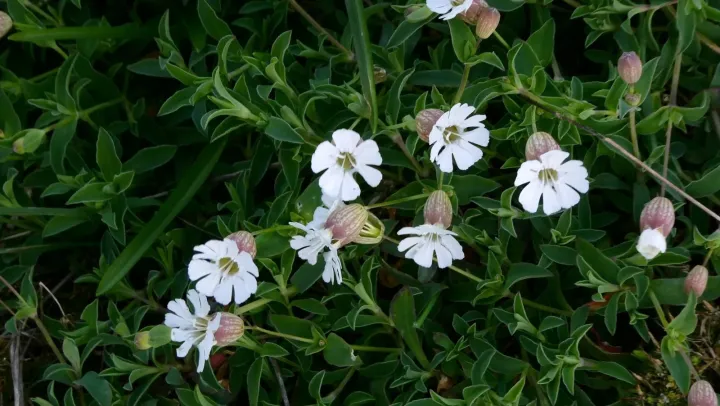
Description
Growing requirements
Sea campion (Silene uniflora) is a perennial plant belonging to the Caryophyllaceae family. It is native to the coastal regions of Europe, where it thrives in rocky crevices, shingle beaches, and sandy cliffs.
The plant exhibits unique botanical adaptations to maritime environments, including fleshy, glaucous leaves that help reduce water loss. It grows in dense, cushion-like mats, making it an excellent ground cover for rocky slopes.
Regarding soil requirements, Silene uniflora demands excellent drainage. In cultivation, it performs best in gritty, alkaline, or neutral soils. Heavy, waterlogged soils are detrimental and typically lead to root rot within a single season.
The plant is highly tolerant of exposed, windy conditions and high salinity levels. It is essentially photophilous, meaning it requires full sun exposure to maintain its characteristic compact habit and prolific blooming.
In ornamental horticulture, sea campion is highly prized for alpine gardens and rockeries. Its low-maintenance nature makes it an ideal candidate for gardeners seeking durable, drought-tolerant perennials for difficult, stony sites.
Main diseases and pests
The primary threat to the health of Sea campion is the development of fungal infections, such as leaf spot or crown rot, especially when air circulation is poor. Excessive humidity is the most common trigger for these issues.
Pests such as aphids and thrips may cause damage during the active growing season. They target the succulent growth and buds, which can lead to unsightly deformations of the flowers and stunted development of the plant.
Root-knot nematodes can occasionally cause significant damage if the plant is grown in contaminated soil. Signs of infestation include yellowing leaves and a general lack of vigor, which are often mistaken for nutrient deficiencies.
In humid microclimates, slugs and snails may graze on the young, tender foliage. Providing a dry, gritty mulch around the base of the plant can serve as a mechanical barrier to reduce such damage during the spring.
Integrated pest management protocols suggest minimizing chemical inputs and focusing on environmental control. Maintaining proper spacing and ensuring the crown of the plant stays dry are the most effective preventive measures against major diseases.