
Night-flowering catchfly
Silene noctiflora L.
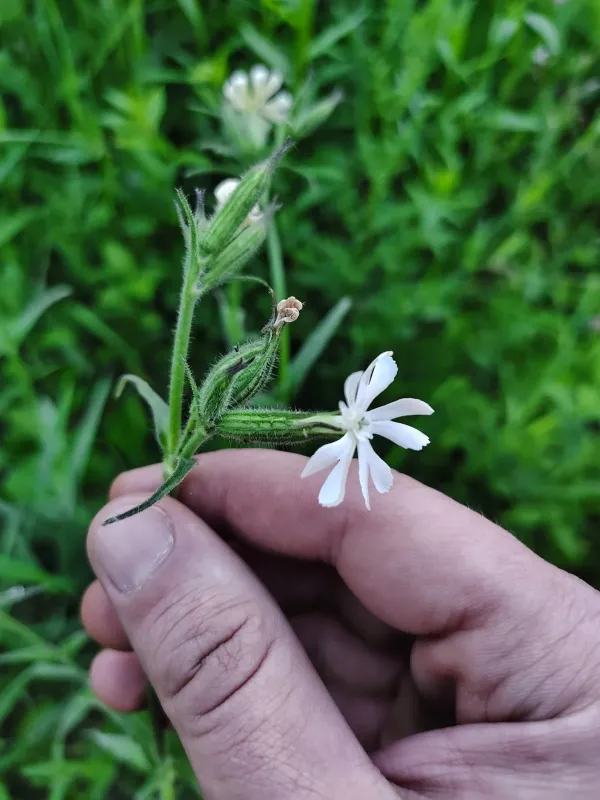
Description
Growing requirements
Night-flowering catchfly (Silene noctiflora L.) belongs to the Caryophyllaceae family. It is recognized primarily as an agricultural weed that infests a variety of row crops, cereals, and forage fields across temperate regions.
This species thrives in fertile, well-drained soils rich in nitrogen. It frequently establishes itself in open disturbed habitats, showing a strong preference for loamy and sandy soil textures that maintain consistent moisture levels.
The plant is widely distributed across the Northern Hemisphere. Its ability to adapt to modern agricultural practices makes it a persistent competitor in managed landscapes, often requiring dedicated intervention to manage populations.
Botanically, it is distinguished by its sticky, glandular hairs covering the stems and leaves, which can trap small insects. As the common name suggests, the flowers bloom during the evening and night to attract nocturnal pollinators.
Growth requirements are primarily linked to sufficient sunlight and soil nutrient availability. As a heliophilous plant, it effectively competes in thin or poorly established crop stands, demanding vigilant field management.
Main diseases and pests
The primary threat of night-flowering catchfly is its role as an aggressive competitor for water, light, and soil minerals. High densities of this weed can drastically reduce the yield potential of staple food crops.
The plant serves as a host for various pathogens that threaten agricultural crops, including species that cause fungal rusts and mildews. It provides a niche for these diseases to flourish before spreading to the main crop.
Several insect pests, such as aphids, are frequently associated with the sticky vegetation of the catchfly. This association allows pests to build up large populations on field borders or within the crop canopy itself.
Management strategies focus on cultural practices, including crop rotation and competitive planting. Mechanical weed control such as harrowing or inter-row cultivation is highly effective when implemented early in the growth stage.
Given the high seed output of the plant, preventing seed rain is critical. Producers should focus on reducing the soil seed bank by implementing integrated weed management strategies over multiple seasons.