
White campion
Silene latifolia Poir.
Description
Sowing dates
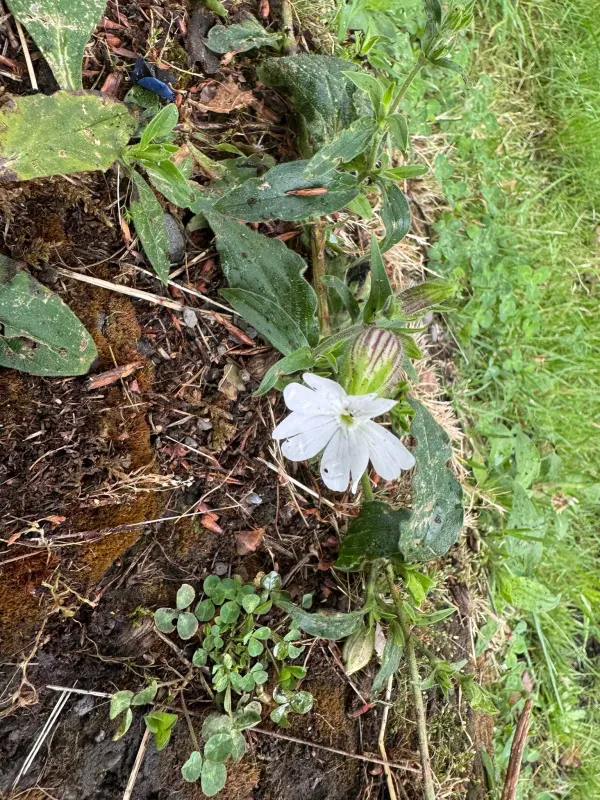
White campion (Silene latifolia Poir.) is a herbaceous plant belonging to the Caryophyllaceae family. While often considered a weed in agricultural landscapes, it is a significant plant in ecological studies and potential agricultural research.
The plant reproduces primarily via seeds, which possess high longevity in the soil seed bank. Understanding the germination cycles of this species is essential for effective field management and preventing its spread into primary crops.
Seed germination typically occurs in early spring when soil temperatures reach 6–8 degrees Celsius. The species exhibits a versatile growth strategy, allowing it to establish in various disturbed habitats including agricultural fields and meadows.
Botanically, it features a strong taproot and a rosette of leaves during the first year of growth. The transition to the flowering stage usually occurs in the second year, following a period of vernalization.
Native to Europe, Western Asia, and Northern Africa, the plant has successfully adapted to diverse climates, demonstrating a high degree of phenotypic plasticity in response to soil conditions.
Growing requirements
White campion thrives in well-drained loamy soils but is highly adaptable to various soil textures including sandy and rocky substrates. It generally prefers neutral to slightly alkaline pH levels for optimal growth.
As a light-demanding species, it prefers open environments where competition for sunlight is minimized. In closed agricultural canopy conditions, its growth rate and reproductive success are significantly limited.
The plant is noted for its drought tolerance due to its deep taproot system, which allows it to tap into deeper soil moisture during dry spells in the summer months.
Temperature requirements are moderate, making the species highly resilient in temperate climates. It exhibits significant winter hardiness, enabling the basal rosettes to survive extreme winter temperatures under snow cover.
Effective management requires minimizing nitrogen surplus, as the plant can become hyper-competitive in nutrient-rich environments, potentially shading out desirable crops during the early stages of establishment.
Main diseases and pests
Fungal pathogens such as rusts and powdery mildew are common threats to white campion. These diseases can impair the plant's health and serve as a reservoir for pathogens affecting related cultivated species.
Insect pests, including aphids and leaf-eating larvae, frequently inhabit the plant. While this contributes to biodiversity, in an agricultural context, it necessitates monitoring to ensure pests do not migrate to main crops.
Mechanical control, particularly shallow cultivation and harrowing, is highly effective for removing young plants before they develop deep taproots that anchor them firmly into the soil.
Chemical control involving systemic herbicides is standard in industrial farming. However, integrated pest management (IPM) strategies are recommended to prevent the buildup of chemical resistance in plant populations.
Maintaining high hygiene standards along field borders and buffer strips is critical to preventing the encroachment of white campion into prime agricultural lands.