
Forked catchfly
Silene dichotoma Ehrh.
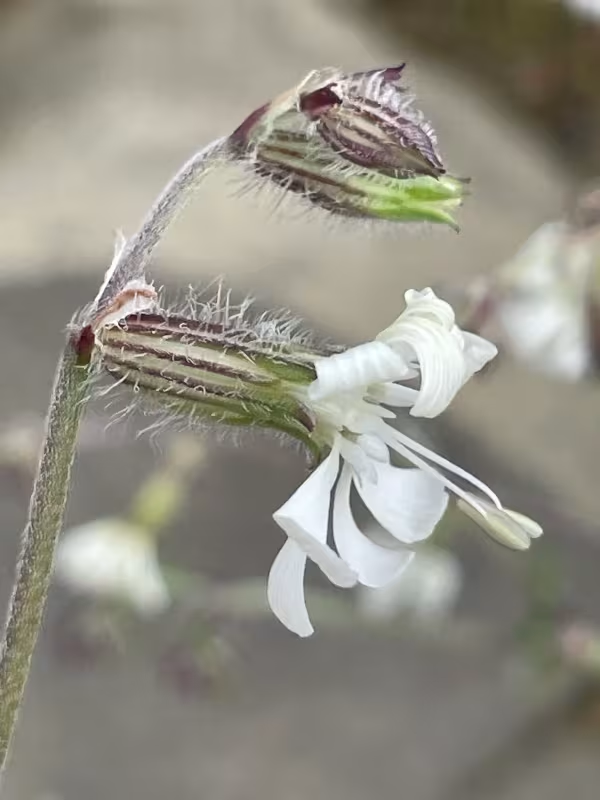
Description
Sowing dates
Forked catchfly (Silene dichotoma Ehrh.) belongs to the Caryophyllaceae family. It is an annual herbaceous plant often found as a weed in cereal and grassland fields, posing a challenge to crop yields.
The plant exhibits both winter and spring growth habits, allowing it to adapt to various cropping seasons. Its germination is highly dependent on light, moisture, and temperature fluctuations in the topsoil layer.
Seeds can germinate throughout the growing season, which necessitates a strategic approach to field management to minimize competition with the main crop.
The life cycle is marked by rapid vegetative development, enabling the plant to establish itself quickly and outcompete young seedlings of agricultural crops for limited resources.
Proper field scouting during the early stages of crop development is essential to identify infestations and implement appropriate control measures promptly.
Growing requirements
Silene dichotoma thrives in sunny environments with well-drained, fertile soils. It shows great adaptability, occurring frequently in disturbed habitats and agricultural lands with neutral pH levels.
The plant is relatively tolerant of cool conditions, which explains its common presence in autumn-sown cereal crops where it can over-winter as a rosette before blooming in the spring.
Effective management requires deep tillage to bury seeds beyond the germination zone, combined with competitive crop rotations that maximize ground coverage.
Regular maintenance of field margins is crucial to prevent the spread of seeds into the primary production area during the harvest and tilling processes.
Chemical control involving selective herbicides may be necessary in commercial fields, provided that applications adhere to the physiological growth stage of both the weed and the crop.
Main diseases and pests
Forked catchfly acts as an alternative host for several pests, including leaf-mining insects and various species of caterpillars that can transfer to economically important crop plants.
It can also harbor specific fungal pathogens, such as powdery mildew, which can significantly reduce the vitality of the plant and spread to neighboring vegetation under favorable conditions.
Root system interactions with soil nematodes have been observed, potentially impacting the health of subsequent susceptible crops in the rotation.
Environmental stress, such as excess moisture, may lead to secondary fungal infections that weaken the plant but do not prevent the successful production of viable seeds.
Integrated Pest Management (IPM) strategies emphasize the removal of these weeds from non-cropped areas to reduce the overall pressure of pests and diseases on the farming system.