
Senecio candicans
Senecio candicans Wall. ex DC.
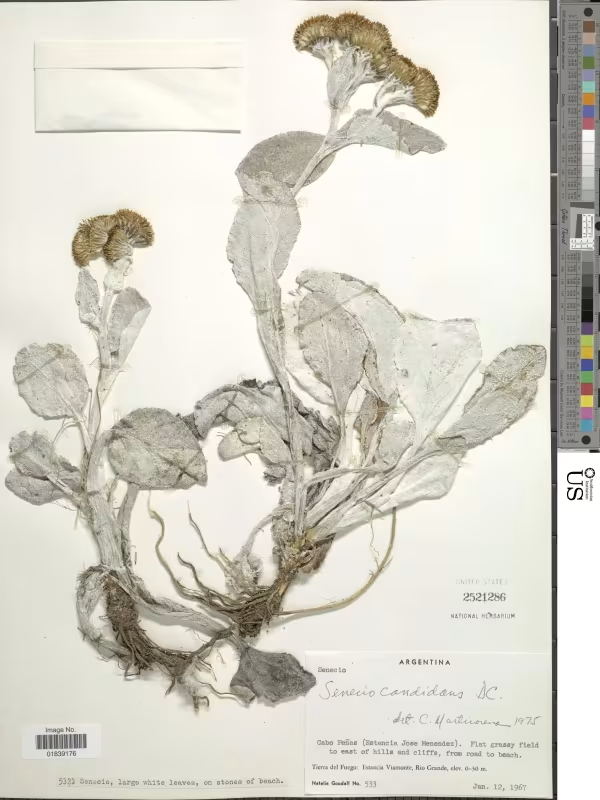
Description
Growing requirements
Senecio candicans, commonly known as Angel Wings, is a striking ornamental plant belonging to the Asteraceae family. Originating from the coastal regions of Patagonia, it has evolved to thrive in harsh, wind-swept environments, which contributes to its unique aesthetic features.
The plant is characterized by its large, broad leaves covered in thick, felt-like silver-white hairs. This adaptive feature helps the plant conserve water and reflects intense sunlight, making it a highly resilient addition to hot, dry landscapes.
For optimal growth, it requires full sun exposure and excellent soil drainage. It is well-suited for sandy or gravelly soil profiles. Heavy, clay-based soils should be avoided or heavily amended with grit to prevent water retention around the root ball.
Climate requirements include protection from severe frost, although it exhibits moderate hardiness in milder zones. In regions with freezing winters, the plant is typically grown as an annual or overwintered indoors in a cool, bright greenhouse or conservatory.
The cultural practice focuses on low-input management. Watering should be sparse and conducted only when the soil has completely dried out. Fertilizer applications should be very limited to maintain the plant's natural, compact, and silver-toned appearance.
Main diseases and pests
The primary threats to Senecio candicans involve fungal diseases resulting from excessive moisture and poor air circulation. Root rot is the most common issue in poorly drained substrates, which can lead to rapid collapse of the root system.
Pests are generally infrequent, but plants can be susceptible to infestations of mealybugs and aphids, particularly in greenhouse conditions. Proactive monitoring and the application of horticultural soaps are effective methods for managing localized pest populations.