
Senecio brasiliensis
Senecio brasiliensis (Spreng.) Less.
Description
Sowing dates
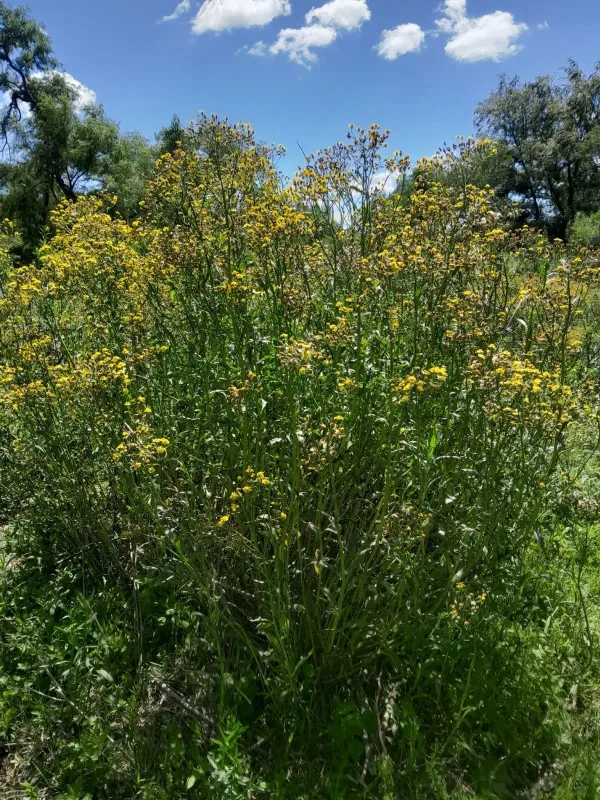
Senecio brasiliensis is a prominent member of the Asteraceae family, often recognized for its stature and distinctive yellow inflorescences. This herbaceous plant is native to South America, thriving in diverse environments across Brazil and surrounding regions.
Botanically, it features alternate, often serrated leaves and numerous flower heads clustered in corymbs. The plant displays significant morphological variability depending on soil and climatic conditions, which is common within the genus Senecio.
As a crop, it has historical significance in traditional herbal medicine. Its nectar-producing qualities also make it a valuable plant for beekeeping, contributing to local honey production in its native range.
Propagation is primarily achieved through seeds. Sowing is typically carried out in well-prepared, aerated soil during the favorable seasonal windows to ensure robust establishment of the root system.
The plant has been subject to studies regarding its chemical composition, specifically its pyrrolizidine alkaloid content, which is a critical aspect for agricultural management and livestock safety.
Growing requirements
Senecio brasiliensis is well-adapted to subtropical conditions, showing a preference for stable temperatures ranging from 18 to 26 degrees Celsius. It is relatively resilient to environmental fluctuations.
The plant thrives in loamy or sandy soils that possess good drainage properties. It is crucial to avoid waterlogged conditions, which can inhibit healthy root development and promote decay.
Sunlight exposure is a limiting factor for biomass production and flowering. High solar radiation levels are generally beneficial, leading to denser inflorescence and better physiological health.
While the plant exhibits moderate drought tolerance, adequate moisture during the early growth stages is essential. Irrigation should be managed to prevent excessive soil saturation.
Fertilization with balanced nutrients supports vigorous vegetative growth. However, care should be taken to avoid nitrogen-heavy regimes that might overly prioritize leaf development at the expense of reproductive health.
Main diseases and pests
Pests such as defoliating insects pose the primary threat to Senecio brasiliensis crops. Early detection through regular field scouting is necessary to prevent significant yield losses.
Fungal pathogens can affect the plant, particularly in humid conditions or where there is poor air circulation. Proper planting density and spacing are key preventive cultural practices.
Livestock toxicity is a significant management issue. Because Senecio species can be harmful to cattle and horses, pastures must be carefully managed to ensure that contaminated hay or forage is not consumed.
Weed competition during the seedling stage can significantly reduce crop survival rates. Mechanical weeding or careful inter-row cultivation is highly recommended to protect young plants.
Integrated Pest Management (IPM) strategies are preferred to control harmful insects while preserving the health of local pollinator populations that frequent the plant.
Harvesting
The harvest of Senecio brasiliensis for medicinal purposes is typically timed with the peak of the flowering period. This is when the secondary metabolites, valued for their biological activity, are most abundant.
Post-harvest processing involves drying the plant material in well-ventilated, shaded areas. This slow-drying method preserves the integrity of delicate plant compounds and improves product quality.
Proper storage is essential to prevent mold growth and pest infestation. Using breathable containers like jute or paper sacks helps maintain the stability of the dried product over time.
For beekeeping applications, the harvest refers to the honey extraction periods aligned with the species' peak blooming season, requiring coordination with apiary management schedules.
Ensuring sustainable harvesting practices helps maintain wild and cultivated populations, allowing for recurring yields across multiple growing seasons.