
Sedum versadense
Sedum versadense C.H. Thomps.
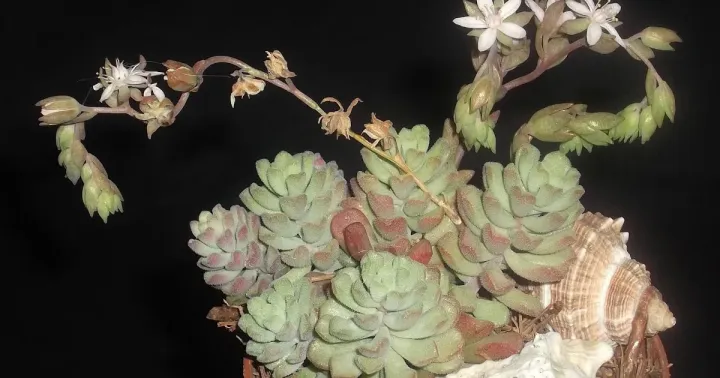
Description
Growing requirements
Sedum versadense is a perennial succulent belonging to the Crassulaceae family. It is highly valued for its dense, rosette-forming structure and fleshy leaves, which serve as water-storage organs, allowing the plant to thrive in arid conditions.
Native to the mountainous regions of Mexico, this species has evolved in rocky, well-draining terrain with high sun exposure. Understanding its natural habitat is crucial for successful cultivation in greenhouses or home collections.
The primary soil requirement is excellent drainage. A specialized substrate for succulents, typically composed of peat-free soil mixed with coarse sand, pumice, or perlite, is recommended to ensure that moisture does not accumulate around the roots.
Light intensity significantly affects the plant's morphology. To maintain a compact and healthy appearance, Sedum versadense requires bright, direct, or slightly filtered light. Insufficient light leads to etiolation, which weakens the plant's structure.
Temperature management involves keeping the plant in a moderate range during the growing season. A period of cooler temperatures during the winter is often beneficial to trigger dormancy, which supports the plant's long-term health and seasonal vitality.
Main diseases and pests
The most significant threat to Sedum versadense is overwatering, which quickly leads to root rot and collar decay. Proper moisture management is the most important aspect of maintaining the longevity of this succulent.
Pests, particularly mealybugs and root mealybugs, represent a common challenge. These insects hide in the tight spaces between leaves, feeding on the plant's sap and reducing its overall vigor and aesthetic appeal.
Good cultural practices, such as ensuring adequate airflow and maintaining hygiene in the growing area, are the first line of defense against both fungal and insect infestations.
If an infestation occurs, systemic insecticides or targeted biological controls should be employed. It is important to avoid oil-based sprays that can damage the plant's waxy leaf coating, which is essential for its natural water retention.
Using inorganic mulch, such as grit or lava rock, around the base of the plant helps keep the foliage dry and prevents direct contact with damp soil, significantly lowering the risk of common fungal diseases.