
Sedum sarmentosum
Sedum sarmentosum Bunge
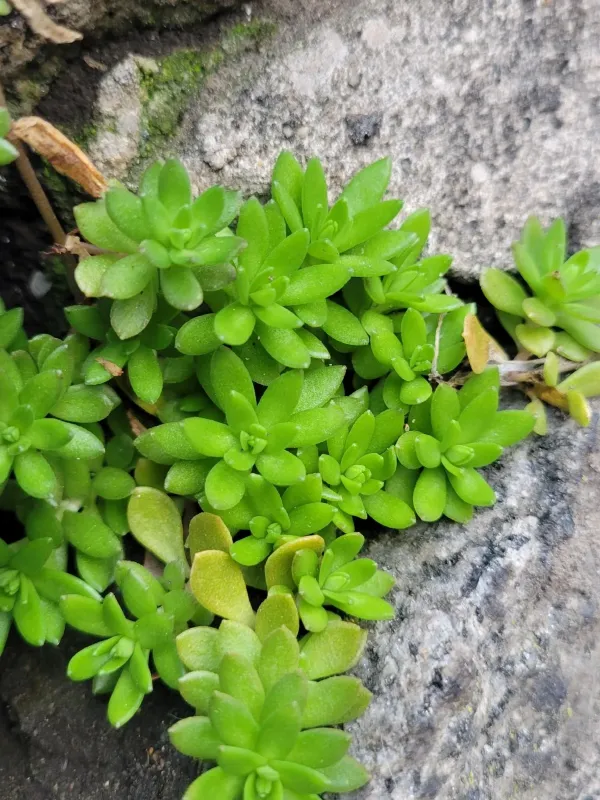
Description
Sowing dates
Sedum sarmentosum belongs to the Crassulaceae family and is a perennial herb known for its trailing growth habit and remarkable adaptability to various environmental conditions.
The propagation of this crop is primarily achieved through vegetative methods, specifically using stem cuttings or by dividing established clumps during the active growing season.
Spring and early summer are the most effective periods for planting, as warmer temperatures and increased daylight hours facilitate faster root development and establishment.
Cuttings should be placed directly onto well-draining soil, ensuring that nodes are in contact with the ground to stimulate the growth of adventitious roots.
Due to its high regenerative capacity, even small stem fragments can develop into healthy, independent plants, making it a highly efficient crop to multiply.
Growing requirements
This species is highly resilient, thriving in poor, sandy, or stony soils where other crops might struggle, making it an excellent candidate for land reclamation.
Sedum sarmentosum is a heliophilic plant, requiring full sun exposure to maintain its characteristic compact growth form and vibrant, bright green leaf coloration.
While the plant is naturally drought-tolerant, moderate moisture levels during the initial growth phase significantly improve biomass production and overall plant vigor.
The optimal temperature range for the development of this crop is between 18 and 28 degrees Celsius, though it exhibits significant cold hardiness during winter.
It is essential to avoid sites with waterlogged soil, as poor drainage is the primary cause of physiological stress and root degradation in this succulent species.
Main diseases and pests
Excessive soil moisture is the primary threat to the crop, often leading to the development of fungal pathogens, such as root and stem rots that can devastate a planting.
In high humidity environments, powdery mildew may appear on the foliage, necessitating improved air circulation and the removal of affected plant segments to prevent spread.
Pests, such as aphids, can occasionally infest the succulent tissues, requiring integrated pest management strategies to protect the crop's vitality during the season.
Monitoring the planting for signs of chlorosis or wilting is essential for early intervention, as succulent tissues are sensitive to sudden changes in environmental health.
- Implement strict drainage management
- Monitor foliage regularly for mildew
- Manage weed competition in young stands
Harvesting
The harvest of Sedum sarmentosum is conducted primarily for its medicinal applications, as the plant contains diverse phytochemicals used in traditional and modern medicine.
Harvesting is ideally timed during the flowering phase, as the concentration of active compounds within the succulent tissues is at its highest during this reproductive cycle.
Post-harvest processing involves rapid drying in well-ventilated conditions at low temperatures to prevent degradation of the sensitive organic components in the leaves.
Beyond medicinal use, the crop is highly valued as a living mulch or ground cover, effectively suppressing weeds and preventing soil erosion on sloped terrains.
The crop requires minimal post-harvest intervention, and the remaining root mass quickly initiates new growth, allowing for sustainable cultivation over multiple years.