
Rock stonecrop
Sedum rupestre L.
Description
Growing requirements
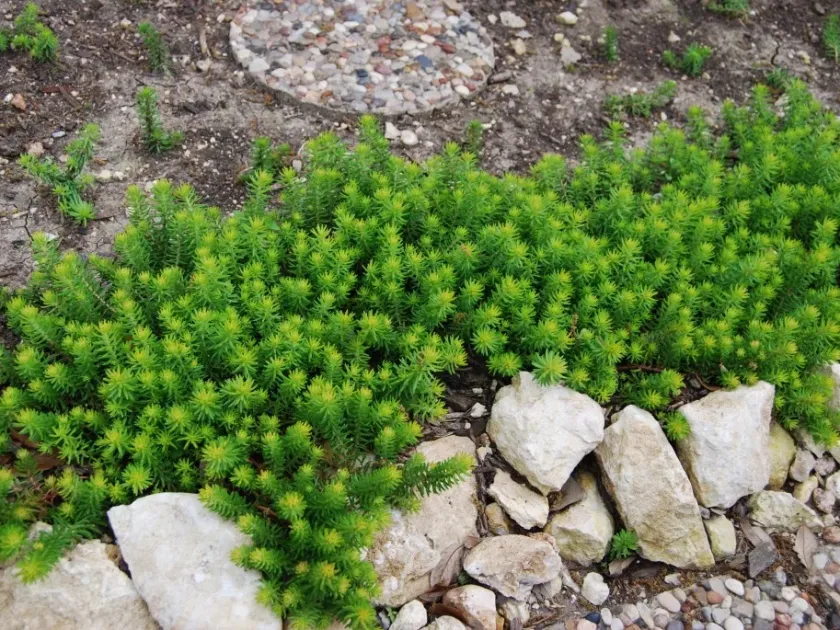
Rock stonecrop is a perennial succulent plant belonging to the Crassulaceae family. It is widely cultivated for its aesthetic appeal as a groundcover, capable of forming dense, mat-like colonies on challenging terrain.
The plant originates from the rocky regions of Europe, where it has adapted to life on cliffs, sandy slopes, and thin, rocky soils. Its botanical structure is defined by needle-like, fleshy leaves that store moisture effectively.
In terms of cultivation, this species thrives in full sun exposure. While it is highly tolerant of poor soil fertility, the presence of a well-draining substrate is absolutely essential to prevent physiological stress.
The crop does not tolerate waterlogging, which often leads to root dysfunction. Its high drought tolerance makes it an ideal candidate for rock gardens, extensive green roofs, and dry landscape restoration projects.
Agrotechnical management is relatively simple due to the plant's resilience. It requires minimal fertilization and occasional weeding to ensure the young shoots are not suppressed by more aggressive vegetation.
Main diseases and pests
The primary threats to Sedum rupestre are fungal diseases caused by excess humidity and poor air circulation. Root rot and stem decay are common in poorly drained areas or during seasons with excessive rainfall.
Insect pests such as aphids and mealybugs can occasionally infest the succulent tissues. These pests damage the plant by feeding on the sap, which may lead to stunted growth and secondary infections.
Cultural control is the most effective strategy. By ensuring proper spacing and preventing over-watering, the risk of fungal outbreaks is significantly reduced, maintaining the health of the planting bed.
If chemical intervention becomes necessary, systemic insecticides should be applied to manage pest outbreaks, while fungicides are targeted specifically at eradicating fungal pathogens that affect the root zone.
Monitoring the plants for signs of discoloration or wilting is a key part of routine agronomic care. Early detection of environmental stress or pest presence is critical for preserving the integrity of the crop area.