
Searsia tenuinervis
Searsia tenuinervis
Description
Growing requirements
Searsia tenuinervis is a prominent shrub species belonging to the Anacardiaceae family. It is native to the dry regions of southern and eastern Africa, where it has successfully adapted to arid and semi-arid environments.
The plant thrives in well-drained, sandy, or rocky soils. It is highly sensitive to waterlogged conditions, which can lead to rapid root rot, making site selection with proper drainage essential for cultivation success.
Climate requirements for this species include high exposure to sunlight. Searsia tenuinervis is physiologically structured to handle high temperatures and low atmospheric humidity, typical of savanna habitats.
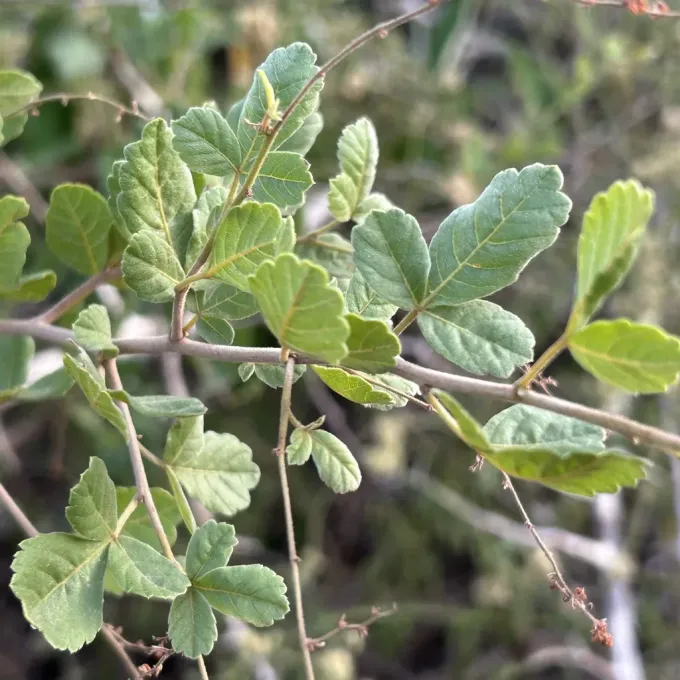
Botanically, it is characterized by its pinnate leaves with fine veining, which gives the plant its scientific name. Its root system is deep and expansive, allowing the shrub to access water resources deep within the soil profile.
Agricultural management should focus on maintaining open planting patterns to ensure adequate air circulation and light penetration throughout the foliage, which is vital for maintaining the plant's health.
Yield
In terms of agricultural utility, Searsia tenuinervis is valued for its resilient forage quality. It provides a reliable feed source for livestock, particularly during the dry season when traditional pasture grasses fail.
The fruit of the plant is edible and harvested in some regions for local consumption. Studies suggest that the seeds and berries contain biochemical compounds that may have potential industrial applications in oil extraction.
The plant's wood is hard and durable, often utilized in artisanal crafts and the production of small farm tools. Furthermore, its tannin-rich bark is traditionally harvested for leather tanning processes.
When managed as a plantation crop, biomass yield can be optimized through selective pruning, which encourages a higher density of younger, more nutritious shoots for browsing or harvesting.
The species also plays a significant role in ecological restoration, as it acts as an efficient soil stabilizer, preventing erosion in degraded landscapes while simultaneously improving soil structure.
Main diseases and pests
The primary threats to Searsia tenuinervis cultivation are fungal diseases, especially powdery mildew, which can develop when humidity levels rise due to poor airflow or dense planting configurations.
Insect pests, such as leaf-mining beetles and sap-sucking insects, often cause aesthetic and structural damage to the foliage, necessitating integrated pest management strategies to keep populations under control.
Root-knot nematodes can pose a significant challenge in areas with sandy soils, potentially stunting growth and reducing overall plant vitality. Site preparation should include testing for nematode activity.
Competition from invasive weeds can drastically reduce the survival rate of newly transplanted seedlings. Maintaining a clear buffer zone around the base of the plant is essential during the establishment phase.
To prevent disease spread, it is recommended to conduct regular sanitation by removing dead or infected twigs. Utilizing organic fungicides and ensuring optimal spacing between plants significantly reduces risk factors.