
Searsia discolor
Searsia discolor
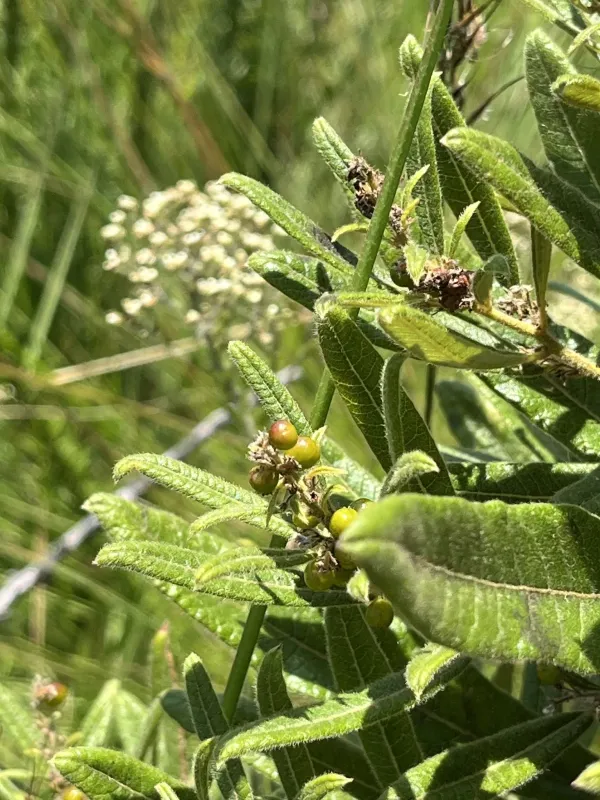
Description
Sowing dates
The sowing of Searsia discolor seeds is typically carried out in spring when the soil has warmed sufficiently. The seeds require scarification to improve germination rates, as they possess a tough protective seed coat.
In nursery settings, it is recommended to use light, well-draining substrates. The optimal planting depth is approximately 1–2 centimeters, which ensures adequate soil contact for the seeds.
A seedling-based approach is often preferred over direct sowing to ensure that the young root system receives proper care and protection. Transplantation to the permanent site should occur only after the risk of late frosts has passed.
The spacing between plants depends on the intended use; generally, a gap of 1.5–2 meters is required to allow for full crown development and sufficient airflow between mature bushes.
Maintaining moderate soil moisture in the first few months is crucial for seedling establishment before the plant develops a deep, self-sustaining root system.
Growing requirements
Searsia discolor, a member of the Anacardiaceae family, is native to regions with mild climates. It prefers sunny locations that are sheltered from strong winds, where it can reach its full growth potential.
This species is not particularly demanding regarding soil fertility, but it performs best in well-draining loamy or sandy soils. A primary requirement is the absence of waterlogging, which can easily cause root rot.
The plant exhibits moderate drought tolerance, making it suitable for cultivation in regions with unpredictable rainfall. Nevertheless, supplemental irrigation during extreme heat waves will significantly improve vegetative growth.
For optimal development, soil pH should be maintained between slightly acidic and neutral ranges. If pH levels deviate significantly, amendments such as peat or lime may be necessary.
Searsia adapts well to various light conditions, though the most vigorous and dense growth is observed when the plants receive full sun exposure for the majority of the day.
Yield
The agricultural and economic value of Searsia discolor lies primarily in its ornamental appeal and its efficacy in creating windbreaks and soil-stabilizing hedges in arid climates.
When managed with proper agrotechnical practices, the plant forms a dense thicket useful for erosion control. Furthermore, the biomass of this species is occasionally investigated for the production of aromatic plant extracts.
Yield and growth rates are heavily influenced by environmental conditions; in favorable years, vegetative parts can increase by 50–70 centimeters per season.
Regular maintenance, including sanitary pruning, stimulates active branching, which increases bush density and enhances the overall visual appeal of the planting.
In agricultural practice, Searsia is frequently employed as a companion or supporting crop, helping to improve the microclimate of a farm by reducing wind erosion and protecting sensitive areas.
Main diseases and pests
The most common threats to Searsia discolor are fungal diseases, which often manifest under conditions of excessive soil moisture. Root rot can be fatal for young saplings if soil aeration is poor.
Pests such as aphids and spider mites represent the most significant threat, as they primarily target tender young foliage during the spring growing season.
Timely application of systemic insecticides is an effective way to control pest populations and preserve the health and aesthetic value of the shrubs.
To prevent the spread of diseases, it is essential to follow good agricultural practices, including the regular disinfection of pruning tools to avoid transmitting pathogens between plants.
Mulching the root zone helps conserve soil moisture and acts as a barrier that prevents the lower branches from coming into contact with wet soil, thereby reducing the risk of fungal infection.