
Searsia glauca
Searsia glauca
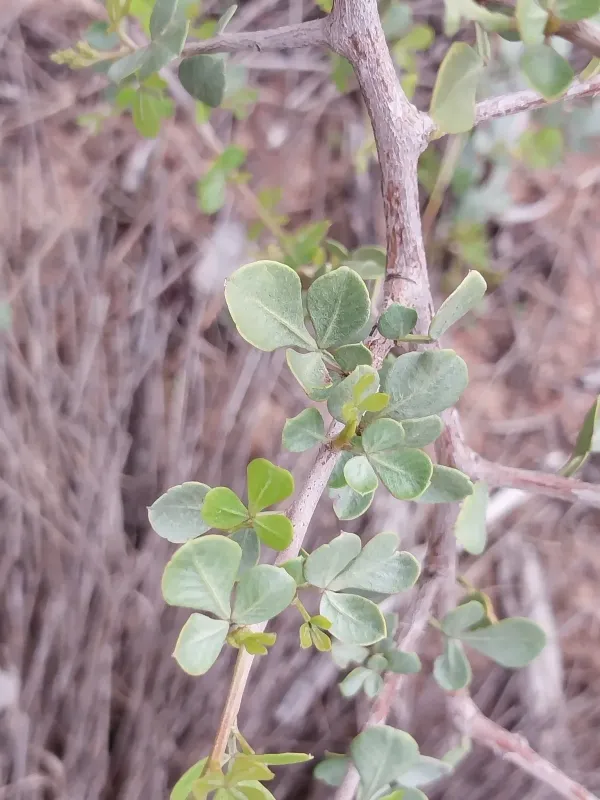
Description
Growing requirements
Searsia glauca is a hardy evergreen shrub belonging to the Anacardiaceae family. Native to South Africa, it has evolved to thrive in challenging environments ranging from arid scrublands to coastal regions.
The plant is well-known for its exceptional tolerance to poor, sandy, and rocky soils. This resilience makes it an ideal candidate for soil stabilization in degraded areas or coastal sites exposed to salty winds.
Optimal growth is achieved in full sun exposure. While the plant can tolerate partial shade, it requires significant solar radiation to maintain its dense foliage structure and the characteristic glaucous hue of its leaves.
Searsia glauca exhibits remarkable drought tolerance. Once established, its deep root system allows it to access water deep within the soil profile, significantly reducing the need for supplemental irrigation.
In addition to its ecological utility in erosion control, the shrub is widely appreciated in landscaping for its ability to form dense screens or hedges, which can be pruned to maintain a desired height and density.
Main diseases and pests
While inherently robust, Searsia glauca is susceptible to root rot if planted in poorly drained soil. Maintaining appropriate moisture levels is crucial to avoid conditions that promote fungal growth in the root zone.
Waterlogged soil is the primary threat to the long-term health of the shrub. Ensuring sufficient drainage is the most effective preventative measure against the rapid onset of soil-borne pathogens.
Insect pests such as scale insects or various sap-sucking arthropods may occasionally infest the foliage, particularly if the plant is stressed by improper environmental conditions or nutrient deficiencies.
Cultural management should focus on preserving the plant's natural vigor. Maintaining a healthy balance of soil nutrients and avoiding over-pruning helps the plant resist potential pest outbreaks effectively.
Regular inspection of the leaf underside is recommended during the growing season. If localized infestations occur, manual removal or the application of organic soap-based treatments can manage the threat efficiently.