
Searsia chirindensis
Searsia chirindensis
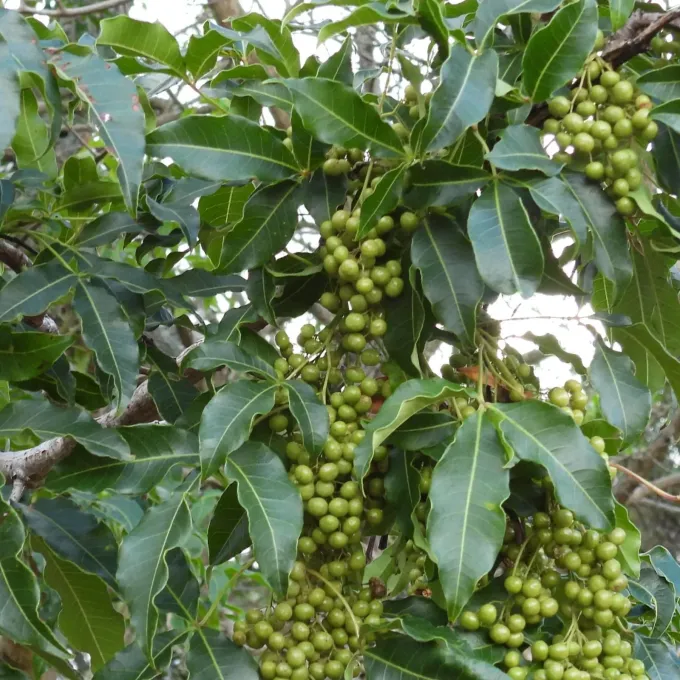
Description
Growing requirements
Searsia chirindensis, commonly known as the Red Currant or Chirinda Koko-tree, belongs to the Anacardiaceae family. It is an evergreen tree or shrub native to the forests and bushlands of southern and eastern Africa, valued for its hardiness and versatility.
The plant thrives in well-drained, fertile soils rich in organic matter. While it is adaptable to various soil types, including sandy and loamy soils, it struggles in waterlogged conditions and requires proper aeration for the root system to remain healthy.
In terms of climate, Searsia chirindensis prefers warm to temperate environments. It is relatively drought-tolerant once established but performs best when receiving regular moisture throughout the growing season, particularly during its early development stages.
Optimal light exposure is essential for maintaining a dense and healthy canopy. Although it can tolerate partial shade, full sunlight promotes faster growth and more intense coloration of the foliage and fruits. It is well-suited for temperate coastal and inland regions.
Propagation is typically achieved through seeds or stem cuttings. Seedlings should be grown in a nursery setting with consistent monitoring until they are robust enough for field transplantation, which is generally done during the rainy season to ensure successful establishment.
Main diseases and pests
Searsia chirindensis is generally a robust species with few serious health issues. However, under conditions of high humidity and poor air circulation, fungal pathogens can infect the leaves and twigs, leading to premature leaf drop or stunted growth.
Pests such as aphids and certain lepidopteran larvae may occasionally infest young leaves. These are usually managed through natural predators or eco-friendly insecticidal soaps, ensuring minimal environmental impact and maintaining the ecological balance.
Root-related diseases are a primary threat usually caused by poor drainage. Protecting the plant from excessive moisture and ensuring the soil remains light and airy is the most effective preventative measure against root rot and related fungal issues.
Wood-boring beetles can be a challenge for older or stressed specimens. Regular health checks and the removal of dead or decaying branches are effective management techniques to prevent the spread of infestations throughout the planting area.
Maintaining strong, vigorous trees through proper fertilization and spacing is the best strategy against pests and diseases. Healthy trees possess natural defenses that allow them to overcome moderate infestations without the need for intensive chemical interventions.
Harvesting
The economic value of this tree lies primarily in its high-quality timber. The wood is dense, strong, and durable, making it an excellent choice for crafting fine furniture, tool handles, and decorative items. Its rich color and texture are highly sought after by local artisans.
Ecologically, the fruits are a vital food source for a wide variety of bird species and small mammals. This makes Searsia chirindensis an important species for reforestation and ecological restoration projects aimed at supporting local biodiversity.
In agroforestry systems, the tree is often used for windbreaks and soil erosion control. Its deep root system helps stabilize slopes, while its dense canopy provides necessary shade for ground-level crops, significantly improving the local microclimate.
Traditional medicinal applications of the plant's extracts involve treating various minor health issues, reflecting its cultural importance. Parts of the bark and leaves contain compounds that have been historically utilized for their antiseptic and protective qualities.
Harvesting timber should be conducted using sustainable practices to ensure the long-term viability of the population. Proper management and pruning encourage the growth of straight, high-quality stems, which maximizes the value of the harvested wood.