
Searsia crenata
Searsia crenata
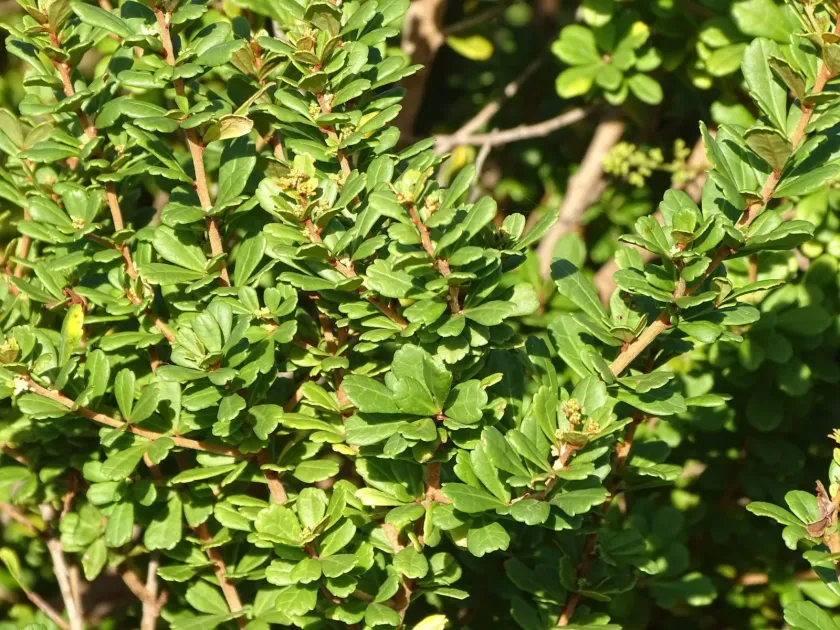
Description
Growing requirements
Searsia crenata, commonly known as the dune currant, is an evergreen shrub belonging to the Anacardiaceae family. Historically, it was classified within the Rhus genus, but botanical revisions have placed it into the Searsia genus, native primarily to South Africa.
The plant thrives in full sun and is remarkably adaptable to various soil types. It performs exceptionally well in sandy, well-drained soils, making it an ideal candidate for coastal landscapes where it withstands salt spray and harsh winds.
Climate-wise, Searsia crenata prefers temperate and subtropical environments. While it is quite drought-tolerant once established, young plants require regular irrigation during the first season to support robust root development.
The botanical structure of the species features small, leathery leaves with a serrated (crenate) margin, which helps the plant retain moisture. Its growth habit can vary from a low-spreading shrub to a small tree depending on environmental stressors and pruning practices.
Regarding cultivation, this species requires very little fertilization. It is well-suited for low-maintenance gardening and xeriscaping, where water conservation is a priority and the soil conditions are naturally challenging.
Main diseases and pests
Searsia crenata is naturally hardy, but it is not entirely immune to threats. The most significant issue is root rot, which is almost exclusively caused by waterlogged soil conditions or poor drainage in the planting site.
Pest issues are generally minor. Occasionally, scale insects or aphids may colonize the stems or underside of leaves. Integrated pest management, such as introducing predatory insects or using horticultural oils, is highly effective.
Fungal leaf spots can occur in humid, stagnant air environments. Maintaining proper spacing between shrubs is crucial to ensure adequate airflow and reduce the humidity levels within the plant canopy.
Mechanical damage to the bark or stems should be treated promptly. Open wounds on the wood can serve as entry points for pathogens, potentially weakening the structural integrity of the plant over time.
Finally, keeping the area around the base of the shrub free from competitive weeds helps the plant maintain vigor, especially in its early growth stages when it is establishing its territory.
Harvesting
Searsia crenata is extensively utilized for hedge planting and privacy screening. Its dense foliage and branching structure create an effective barrier that can be easily shaped through regular pruning.
Ecologically, the plant serves as a vital food source for avian species. The small, pea-sized berries produced after flowering attract a diverse range of birds, making it a staple for wildlife-friendly garden designs.
In conservation projects, the species is used to stabilize dunes and prevent soil erosion. Its intricate root system binds unstable sandy soils, making it a valuable tool for environmental restoration in coastal zones.
Propagation is typically achieved through seeds, which should be harvested when fully ripe. After collection, seeds are cleaned and can be sown in standard seedling trays with a porous potting mix.
The wood of Searsia species is historically known for its durability and has been used in small-scale craft projects, although the primary value of the living plant remains its aesthetic contribution and resilience.