
Searsia erosa
Searsia erosa
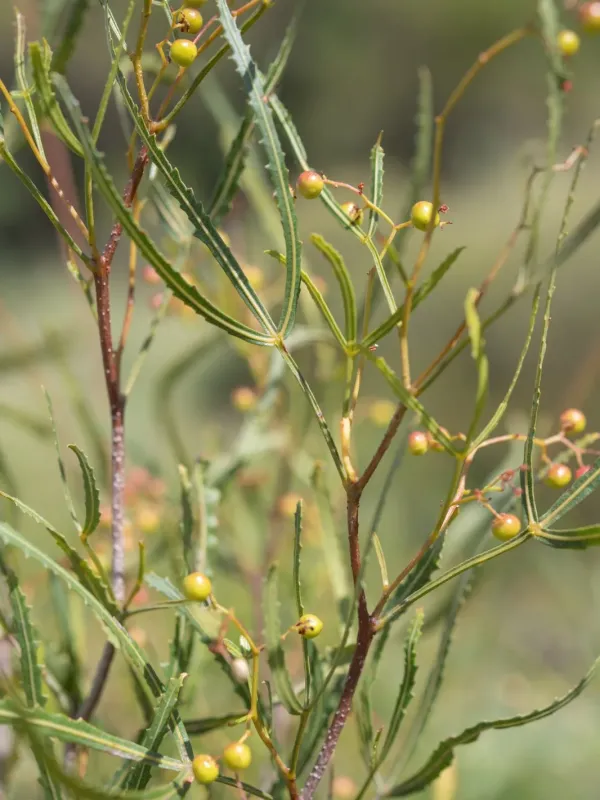
Description
Growing requirements
Searsia erosa, commonly known as the Broom Karee, belongs to the Anacardiaceae family. This evergreen shrub or small tree is highly valued for its distinctive, thread-like leaves that create an elegant, weeping aesthetic in landscape design.
Native to the mountainous regions of South Africa and Lesotho, this plant has adapted to rocky terrains and varying climatic conditions. It is specifically recognized for its remarkable ability to thrive in challenging, dry environments where other species might fail.
The plant requires full sun to maintain its structural integrity and dense foliage. It is highly drought-tolerant once established, making it an excellent candidate for water-wise gardening and xeriscaping projects in arid regions.
Well-drained soil is a non-negotiable requirement for Searsia erosa. Whether planted in sandy or rocky substrates, the soil must facilitate rapid water movement away from the root zone to prevent physiological distress.
In terms of agricultural and horticultural use, the Broom Karee is extensively used as a windbreak. Its resilient branches and dense growth habit make it a functional choice for protecting gardens or orchards from strong winds while adding natural beauty.
Main diseases and pests
The most significant threat to Searsia erosa is root rot caused by poor soil drainage and waterlogging. Excessive moisture in the rhizosphere suppresses root respiration and often leads to irreversible fungal decay.
Insect pests such as scale insects and aphids can occasionally infest the branches. While the plant is robust, heavy infestations can reduce its vigor and aesthetic appeal, necessitating timely intervention with horticultural oils or soap sprays.
Leaf spot diseases may occur in environments with poor air circulation and high humidity levels. Pruning is essential to ensure that light and air reach the center of the canopy, which effectively reduces the risk of fungal proliferation.
Nutrient toxicity, often caused by excessive fertilization, can damage the delicate root hairs of the plant. A low-intensity fertilization program is recommended to support healthy growth without compromising the plant's natural tolerance to nutrient-poor soils.
Overall, the health of the plant is best maintained through preventative measures, including proper site selection and avoiding overhead irrigation. By respecting its natural preferences, growers can ensure longevity and resilience in the field.